 lop News
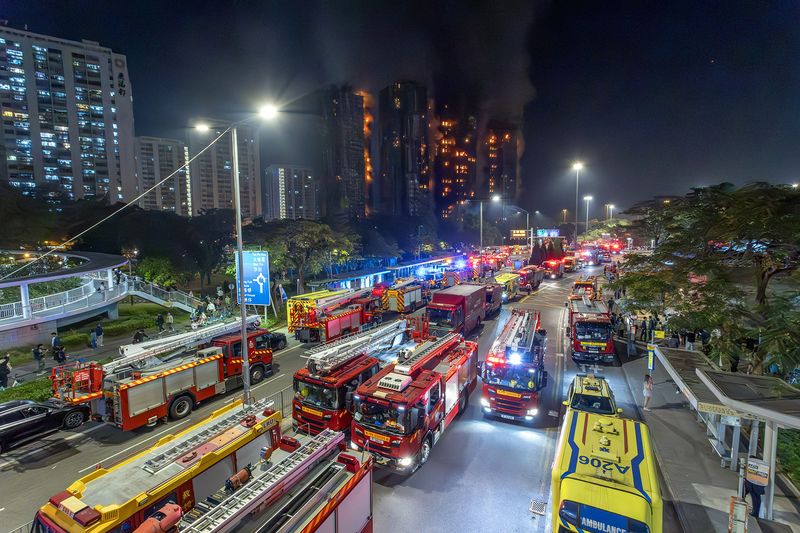
One hundred and sixty-eight people. A six-month-old infant and a 98-year-old retiree. A firefighter who went in and didn’t come out. Ten foreign domestic workers far from home. All killed in a single residential fire that burned for 43 hours in a housing complex built to give ordinary Hong Kongers a foothold in one of the world’s most expensive cities.
On Thursday, Hong Kong begins the formal process of asking how this happened.
The Inquiry Opens
A judge-led independent committee, chaired by Justice David Lok Kai-hong with Senior Counsel Victor Dawes as lead counsel, convenes the first of eight public hearings into the November 26 fire at Wang Fuk Court in Tai Po. Thirty-seven involved parties — including former management committee members, residents, nine government departments, contractors, and the estate’s former property manager — are named to give evidence. The hearings run through April 2.
The committee’s mandate is direct: determine whether fire safety standards were adequate, whether construction practices contributed to the blaze, and whether emergency response failed. Its opening statement left little ambiguity about where the evidence points. “On the day of the fire, nearly all fire safety measures have failed because of human faults,” counsel told the hearing, citing disabled fire alarms and propped-open smoke doors.
What Went Wrong
Wang Fuk Court is a government-subsidized Home Ownership Scheme estate, built in 1983 — eight residential towers, 31 storeys each, nearly 2,000 units housing approximately 4,600 people. Close to 40 percent of residents were seniors aged 65 and above.
The complex was undergoing a large-scale renovation when fire broke out. That renovation is now at the center of the investigation. Prosecutors have presented WhatsApp messages in which contractors explicitly discussed using substandard, non-fire-retardant scaffolding mesh — mixing it with approved materials to pass inspections. Flammable polystyrene foam was used to seal windows on every floor. Of 20 material samples collected from across the site, seven failed safety standards.
The renovation budget had ballooned from an initial HK$152 million to HK$336 million, and authorities are investigating suspected bid-rigging. Hong Kong’s Independent Commission Against Corruption has arrested 14 people on corruption charges; police have arrested a further 22, with 16 suspected of manslaughter.
The fire spread through seven of the eight towers. Fire department ladders and hoses could reach only partway up the 31-storey buildings. At the peak of operations, more than 1,200 fire and ambulance personnel were deployed with over 200 fire apparatus. It was not enough to prevent the deadliest fire in Hong Kong since the 1948 Wing On warehouse blaze.
A Structural Problem
The systemic questions extend well beyond Wang Fuk Court. As of late 2024, nearly 9,000 private residential buildings in Hong Kong were over 50 years old, a figure climbing each year. The Hong Kong Institute of Surveyors has warned that more than 27,000 buildings of various types are aged 30 or older, with concrete spalling, leaking ceilings, corroded pipes, and exposed steel now common.
Residents at Wang Fuk Court had raised safety concerns about the scaffolding materials for nearly a year before the fire. The Labour Department conducted 16 inspections of the renovation project between July 2024 and the week before the blaze, issuing three prosecutions and six improvement notices. The fire happened anyway.
This is the tension the inquiry must resolve: was this an aberration — a uniquely corrupt renovation project that slipped through — or a foreseeable consequence of a system that sends aging high-rises into renovation cycles managed by lowest-bidder contractors under stretched regulatory oversight?
The Human Cost
Yip Ka-kui, a 68-year-old retired engineer who lost his wife Pak Shui-lin in the fire, told Nikkei Asia: “My wife must not die in vain. Those 168 people should not have died in vain.”
Dorz Cheung, 33, now lives with his 87-year-old grandmother in temporary housing one-quarter the size of their former apartment. “I have had nightmares over the past months,” he said. “I have lost my appetite. I often want to vomit.”
Approximately 5,000 residents were displaced. Over 400 homeowners recently petitioned Hong Kong’s chief executive for help meeting ongoing estate management costs for a complex they can no longer inhabit.
The committee has nine months to deliver its findings. It operates outside the Commissions of Inquiry Ordinance, meaning it lacks statutory power to compel testimony — a point critics have flagged as a potential limitation on accountability. Chief Executive John Lee has pledged to “fairly pursue accountability and take disciplinary action based on facts” regardless of the position of those responsible.
Whether that promise holds will depend on how far the inquiry is willing to follow the evidence — not just into the contractors who cut corners, but into the inspection regime that watched them do it.
Sources
- Public hearings begin on who is responsible for deadly Tai Po fire tragedy — South China Morning Post
- Death toll in Hong Kong fire rises to 168 after more remains are identified — NBC News
- Hong Kong fire survivors hope hearings bring yearned-for answers — Nikkei Asia
- Some Wang Fuk Court residents to participate as involved parties in fire probe hearings — Hong Kong Free Press
- Hong Kong’s deadly fire prompts calls for transparent investigation — and a crackdown — NPR
- Hong Kong apartment fires: hearings to begin into Wang Fuk blaze that killed 168 people — The Guardian