 lop News
The numbers from Rhineland-Palatinate tell two stories. One is a Christian Democratic Union victory after 35 years of Social Democratic rule. The other is far more consequential: the far-right Alternative for Germany just recorded its best-ever result in western Germany.
With 31% of the vote, the CDU ousted the SPD from power in a state it had governed since 1991. CDU candidate Gordon Schnieder is poised to become state premier, heading what will likely be a grand coalition with the SPD as junior partners. Jens Spahn, the CDU’s parliamentary group leader in Berlin, described it as a “historic” victory.
But the headline belongs to the AfD.
Breaking Through the Western Wall
The anti-immigration party secured 19.5% of the vote — more than doubling its 8.3% result from 2021. This marks the AfD’s strongest performance ever in a western German state election, eclipsing its previous record of 18.8% in Baden-Württemberg just two weeks earlier.
For years, conventional wisdom held that the AfD was an eastern phenomenon — a party that thrived in the former communist states where economic anxiety and disillusionment with mainstream politics ran deepest. Rhineland-Palatinate demolishes that assumption.
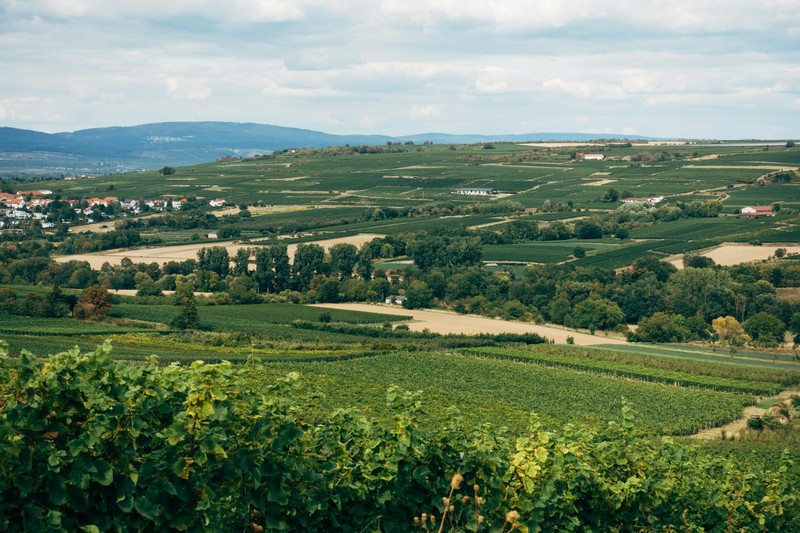
This is not the former East. It is affluent, border-hugging territory that hosts US military bases including Ramstein Air Base, houses chemical giant BASF, and lines its river valleys with vineyards and medieval castles. If the AfD can win 20% here, it can win anywhere.
AfD co-leader Alice Weidel called it a “great success” on social media. Her fellow leader Tino Chrupalla was more blunt: let the governing parties “carry on exactly the same,” he told ZDF — “that is the very best thing for us.”
The Firewall Holds — For Now
Mathematically, a CDU-AfD coalition would command a majority in the state parliament. Politically, it remains unthinkable. Germany’s mainstream parties maintain a strict “firewall” policy refusing cooperation with the far right, and both CDU and SPD reaffirmed that commitment after the vote.
“I have never worked with the extremists from the right and will continue not to,” Schnieder told German television. He pledged to form a “coalition of the democratic center.”
The AfD, which Germany’s domestic intelligence service monitors for extremist positions, will instead lead the opposition. Weidel noted with satisfaction that her party is now the largest opposition force not only in the Bundestag but also in Baden-Württemberg and Rhineland-Palatinate.
A bruising night for the center
The results left Germany’s traditional parties nursing wounds. The SPD, which governed in a three-way “traffic light” coalition with the Greens and Free Democrats, dropped roughly nine percentage points. Party leader and Vice-Chancellor Lars Klingbeil announced personnel debates would follow, while the SPD general secretary called it a “bitter setback.”
The Free Democrats failed to clear the 5% threshold needed to enter parliament. The Left Party fell short as well. Only four parties will sit in the new state legislature: the CDU, SPD, AfD, and Greens.
Jens Spahn, the CDU’s parliamentary group leader in Berlin, framed the victory as vindication for the political center — noting that the CDU and SPD combined for over 50% of the vote. But that interpretation requires ignoring the eleven-point surge that made the AfD the night’s real winner.
What Comes Next
The Rhineland-Palatinate result carries implications far beyond one state. Nationally, the AfD now polls neck-and-neck with the CDU at around 25%. In September, voters in eastern Germany will head to the polls in several state elections where the AfD is expected to perform even stronger — potentially claiming outright majorities.
The firewall has held. But the pressure on it is building, and it is no longer confined to Germany’s eastern states.
Sources
- Election in Rhineland-Palatinate: AfD achieves record result in western Germany — Euronews
- Germany news: CDU wins Rhineland-Palatinate election — Deutsche Welle
- Merz’s conservatives on course to win key state vote despite far-right surge — Politico
- Merz’s party leads, while far right makes gains in Germany’s state election — Le Monde
- Far-right AfD celebrates record showing in western German state vote — Yahoo News/dpa