 lop News
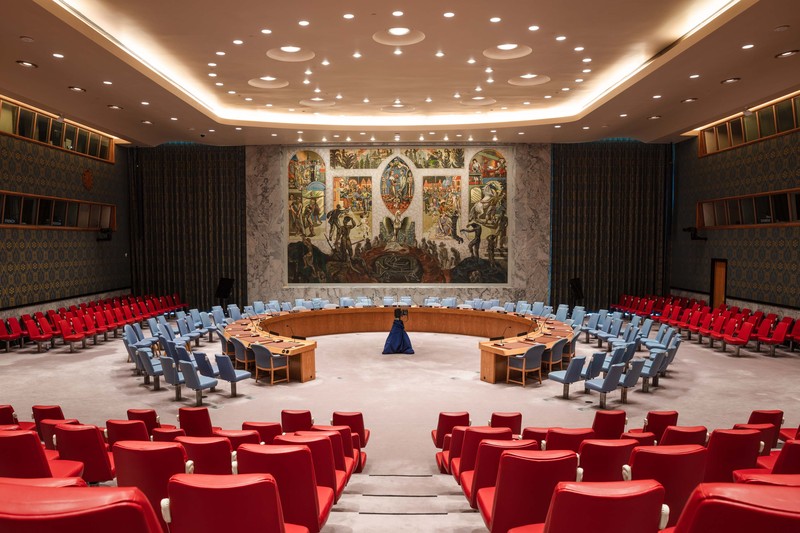
Chinese Foreign Minister Wang Yi picked up the phone on Friday and called Emmanuel Bonne, diplomatic adviser to France’s president. What followed was a joint statement that two permanent members of the UN Security Council now consider the American-Israeli military campaign against Iran to be an “unjust war” — and want it stopped immediately.
The phrase is not diplomatic boilerplate. It is a legal and moral judgment, delivered in public, by two of the five nations with veto power over the body nominally responsible for international peace.
The Jungle Metaphor
Wang told Bonne that “major countries should not make use of their military advantages to arbitrarily attack other countries” and warned that the world “must not slip back to the law of the jungle.” He called the conflict one that “should not have happened” and declared that launching military strikes against Iran during ongoing U.S.-Iran negotiations “clearly violates international law.”
The two sides agreed to coordinate on preventing the war from drawing in additional nations. “The urgent priorities are, firstly, to curb the spread of the conflict and prevent other countries from becoming further involved,” Wang said, according to China’s Foreign Ministry readout. “Resorting to force will not solve the problem.”
France’s alignment with Beijing here is notable but not spontaneous. President Macron has spent the past week building a distinct European position. At an EU summit, he called the escalation “reckless,” demanded a moratorium on strikes against energy and water infrastructure, and urged a Ramadan pause in hostilities. Spain’s Prime Minister Pedro Sánchez went further: “We are against this war because it is illegal.”
The Hormuz Silence
Perhaps more striking than what Beijing said is what it did not say. President Trump spent last week demanding that China, along with NATO allies, Japan, and South Korea, send warships to secure the Strait of Hormuz, through which roughly a fifth of global oil passes. “I’m demanding that these countries come in and protect their own territory,” Trump said, adding: “We will remember.”
China’s response was to call for de-escalation and offer nothing. No ships. No timeline. No acknowledgment that the request had been made. The Foreign Ministry’s statement urged parties to “immediately stop military operations” and “avoid further escalation” — a pointed reframing of the problem as the war itself, not the strait’s closure.
Wang Yi has now spoken with his counterparts from every permanent Security Council member except the United States. The diplomatic geometry is hard to miss: Beijing is building a consensus around ceasefire while Washington is excluded from the conversation.
Winding Down While Escalating
The timing sharpens the contrast. On Thursday, Trump told reporters he was considering “winding down our great Military efforts in the Middle East” but rejected a ceasefire outright: “You don’t do a ceasefire when you’re literally obliterating the other side.” The same week, the Pentagon deployed up to 2,500 additional Marines to the region — the second such deployment in days.
The war, now in its 22nd day, has killed over 1,400 people and displaced an estimated 3.2 million Iranians, according to AP. Israeli forces struck Iran’s offshore South Pars gas field on Wednesday, a significant escalation against energy infrastructure. Iran has retaliated with strikes on Saudi Arabia, Kuwait, the UAE, and Tel Aviv.
Trump’s planned state visit to Beijing, originally scheduled for March 31, has been postponed. The White House said Chinese officials “were fine” with the delay, though Beijing never publicly confirmed the trip was happening in the first place. Ali Wyne of the International Crisis Group captured the irony: “Unable to reopen the Strait of Hormuz alone, Washington now needs its principal strategic competitor to help it manage a crisis.”
A Coalition Without Washington
What is forming is not an anti-American bloc in the Cold War sense. France remains a NATO member; China has its own strategic calculations in the Gulf. But when two Security Council members publicly brand a U.S.-led military operation as unjust and invoke the rule of law against it, the diplomatic isolation runs in one direction.
Six nations — France, Germany, Italy, the Netherlands, the UK, and Japan — issued a joint declaration expressing “readiness” to help with Strait security, but conditioned any action on a ceasefire first. Germany was blunter: “As long as this war continues, there will be no involvement by military means.”
Beijing, meanwhile, has delivered humanitarian aid to Iran through Red Cross channels and positioned itself as a mediator. It is a familiar playbook — the same one China used during the Saudi-Iran rapprochement in 2023 — but the stakes are considerably higher when American bombs are falling.
The question now is whether the ceasefire consensus hardens into something with teeth, or whether it remains a statement of disapproval that Washington can afford to ignore. With Ramadan ending, oil above crisis-level prices, and no diplomatic channel open between Washington and Beijing on the war itself, the window for ignoring it may be closing.
Sources
- China decries ‘unjust war’ on Iran as it calls for immediate ceasefire — South China Morning Post
- China ignores Trump’s Hormuz request as the Iran war deepens — Fortune
- Trump demands NATO and China police the Strait of Hormuz — NPR
- Macron seeks Ramadan ceasefire, as EU leaders say no to Trump on Iran — EUobserver
- Iran rejects cease-fire talks as war rages on — Time