 lop News
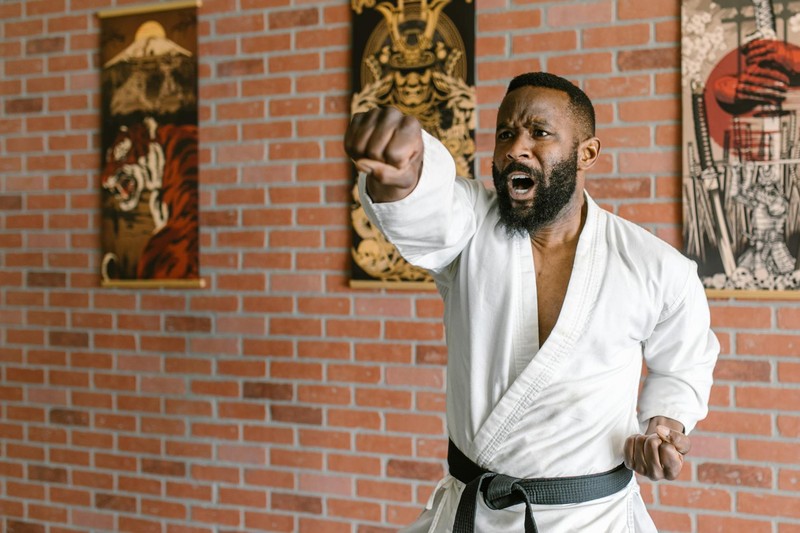
Carlos Ray Norris won his first karate title in 1968, fought Bruce Lee on screen in 1972, starred in a decade’s worth of VHS-era action films that practically wore out the rewind button, and then — long after Hollywood had moved on — became the punchline to a joke format so affectionate it doubled as a monument. He died on Thursday at 86.
His family posted a message on social media confirming his death, saying: “While we would like to keep the circumstances private, please know that he was surrounded by his family and was at peace.”
Few careers in American entertainment have described an arc this strange and this enduring.
The Fighter
Born in Oklahoma in 1940, Norris joined the US Air Force in 1958 and was posted to South Korea, where he began training in Tang Soo Do. By the mid-1960s he was competing seriously, winning the World Professional Middleweight Karate Championship in 1968 and building a celebrity clientele of Hollywood names eager for instruction, according to the Guardian.
It was at a martial arts demonstration in California in 1964 that Norris met Bruce Lee. The two became friends and training partners, and Lee eventually cast Norris in his directorial debut, The Way of the Dragon, in 1972. Their ten-minute final fight — Lee’s balletic precision against Norris’s bulkier, shaggier power — remains one of the most celebrated sequences in martial arts cinema. As the Guardian’s Peter Bradshaw wrote, Lee appeared “boyish and almost slight,” while Norris was “bigger, bulkier, shaggier and hairier, and basically more American.”
Lee’s death in 1973 might have ended Norris’s film career before it began. Instead, it freed him to become the lead.
The VHS King
Norris found his groove in the Reagan-era action boom. His 1977 debut lead in Breaker! Breaker! was a modest hit, but it was the run of films for Menahem Golan and Yoram Globus’s Cannon Group that made him a Friday-night fixture. Missing in Action, The Delta Force, Invasion USA — these were not prestige pictures. They were solidly profitable machines built around a simple premise: Chuck Norris with a large gun and a moral grievance.
His 1983 thriller Lone Wolf McQuade, in which he played a Texas Ranger who takes on an arms dealer opposite David Carradine, arguably represented his peak as an action lead. In one scene, buried alive by villains inside his Dodge, Norris escapes by revving the supercharger and driving straight up through the dirt — an image so gloriously absurd it became a kind of thesis statement for his entire filmography.
Code of Silence in 1985 — originally developed as a Dirty Harry vehicle, according to Bradshaw — earned Norris something he rarely received: favourable critical notices. The following year, The Delta Force paired him with a 63-year-old Lee Marvin in Marvin’s final screen appearance.
Then came television. Walker, Texas Ranger premiered in 1993 and ran for eight years, delivering Norris to a mainstream audience far larger than his theatrical films ever reached. The formula was familiar — a law enforcement officer who let his fists do the enforcing — but the show’s earnest tone and Norris’s stolid charisma made it a ratings staple.
The Meme
The Chuck Norris Facts phenomenon, which emerged in the mid-2000s partly inspired by Walker’s over-the-top heroics, gave Norris something almost no action star of his generation achieved: a second cultural life. The jokes — “Chuck Norris counted to infinity. Twice.” — were absurd by design, but they worked because they were built on genuine affection. The internet wasn’t mocking Norris. It was canonising him.
Norris himself embraced it, appearing in commercials and talk shows that played on his indestructible image. The memes outlasted entire platforms.
The Activist
In his later years, Norris became increasingly visible as a conservative political figure. He endorsed Mike Huckabee in the 2007 Republican primary, backed Newt Gingrich in 2012, and claimed the United States faced “1,000 years of darkness” if Barack Obama won re-election, according to the Guardian. In 2016 he supported Donald Trump’s successful presidential campaign. His 2008 book, Black Belt Patriotism, laid out his political philosophy in characteristically direct terms.
Trump, asked about Norris’s death while boarding Air Force One, called him “a great guy” and “a really good tough cookie,” adding: “We didn’t want to fight him.”
Fellow action stars posted tributes. Sylvester Stallone wrote: “I had a great time working with Chuck. He was all American in every way.” Dolph Lundgren called Norris “the champ” and said he had always looked up to him as a role model. Horror author Stephen King, despite occupying the opposite end of the political spectrum, posted: “Seriously, I thought he was great. Silent Rage scared hell out of my boys … and me.”
Three Lives
Norris founded his own martial arts system, originally called Chun Kuk Do, in 1990. He was married twice — to Dianne Holechek from 1958 to 1989, and to Gena O’Kelley from 1998 until his death. He is survived by O’Kelley and five children.
The karate champion became an action star. The action star became a meme. The meme became something harder to define — a shared cultural reference point that crossed generations, political lines, and the usual shelf life of internet humour. Most jokes get old. Chuck Norris Facts just kept going, because the fondness underneath them was real.
He was 86. The internet, predictably, refuses to accept this.