 lop News
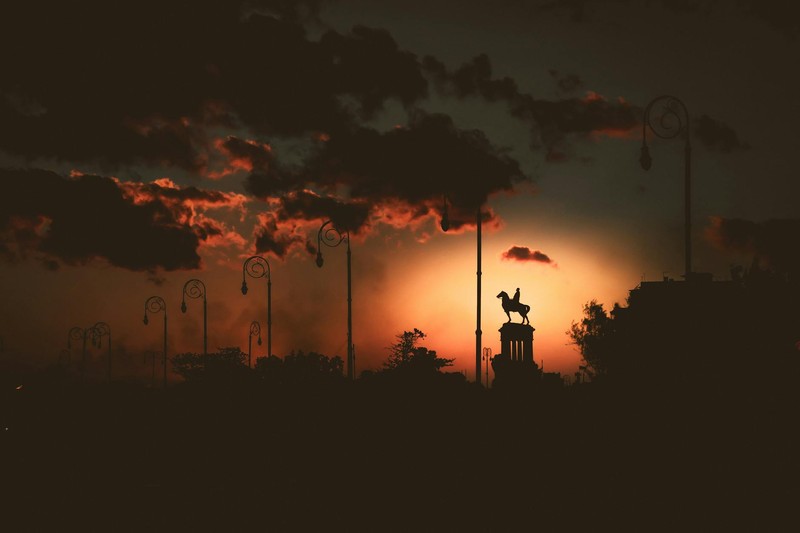
Saturday’s blackout began with a single generating unit at the Nuevitas thermoelectric plant in Camagüey province. Within minutes, a cascading failure tore through what remained of Cuba’s grid, plunging the island’s roughly ten million people into darkness for the third time this month, according to Cuba’s Ministry of Energy and Mines.
The proximate cause was mechanical. The deeper cause is five thousand miles away, in the Strait of Hormuz.
From the Gulf to the Caribbean
Cuba has not received a meaningful oil shipment in three months. President Miguel Díaz-Canel confirmed as much in a nationally televised address on March 13, saying the island was surviving on solar power, natural gas and whatever its ageing thermoelectric plants could still produce. Cuba generates only about 40 per cent of the petroleum it needs domestically, according to the Associated Press.
The shortage has two interlocking origins. The first is the January intervention in Venezuela, which removed Nicolás Maduro and severed Cuba’s most reliable crude pipeline. The second is Executive Order 14380, signed on 29 January, which authorised tariffs against any country supplying oil to Cuba — effectively extending the decades-old embargo into a full fuel blockade. Mexico’s Pemex, another traditional supplier, was warned off. A Russian tanker bound for the island was detained in the Atlantic, according to CiberCuba.
Then came the Strait of Hormuz. “Operation Epic Fury,” the US-Israeli strikes against Iran, prompted Iran’s Revolutionary Guard to attack oil tankers and warn shipping companies away from the passage through which roughly 20 per cent of the world’s oil flows. Brent crude surpassed $80 a barrel in early March, according to AP News and The Economic Times. For a government that already could not pay for fuel, the price spike closed the last theoretical door.
The Diesel Standoff
Against this backdrop, a small diplomatic incident crystallised the absurdity of Cuba’s position. The Washington Post reported on Friday that the Cuban foreign ministry had denied a US embassy request to import diesel for its generators in Havana. The protest note called the request “shameless” — privileges, Havana argued, that were unavailable to the Cuban people themselves.
The refusal is symbolically loaded but practically logical. Cuban citizens endure 16 or more hours of blackout daily even between grid collapses, according to Al Jazeera. Hospitals have postponed surgeries for “tens of thousands” of patients, Díaz-Canel said. Garbage trucks lack fuel to collect waste. Granting the embassy of the country enforcing the blockade a private diesel exemption would be a political impossibility for any Cuban leader, regardless of ideology.
The US State Department, for its part, blamed the grid collapse on “the failing regime’s incompetence.” Secretary of State Marco Rubio said Cuba needs “new people in charge.”
A System Past Its Useful Life
Cuba’s electrical infrastructure was fragile long before the Hormuz crisis. William LeoGrande, a professor at American University, told NPR that the grid is “way past its normal useful life” and that the technicians keeping it running “are magicians.” The electrical deficit now approaches 1,800 megawatts, according to CiberCuba — a figure that reflects near-total system collapse rather than mere shortage.
The human cost compounds daily. “What little we have to eat spoils,” Tomás David Velázquez Felipe, a 61-year-old Havana resident, told the Associated Press. “Our people are too old to keep suffering.” Protests have broken out across the island: pot-banging demonstrations in Havana, a student march at the University of Havana, and an incident in the city of Morón where demonstrators partially destroyed the local Communist Party headquarters.
Human Rights Watch has warned that the electricity crisis is “pushing many essential services to the limit.” The United Nations said it was holding talks with Washington to facilitate humanitarian oil deliveries, having warned in February that Cuba could “collapse” under the blockade.
The Ricochet Effect
Cuba is a case study in how a Gulf war ricochets into places that appear, on a map, to have nothing to do with it. The causal chain runs: US-Israeli strikes on Iran, Hormuz disruption, global oil price spike, a cash-strapped island already cut off from Venezuelan and Mexican crude, grid collapse, darkness. Each link is individually unremarkable. Together they leave a country of ten million people cooking over wood fires.
Díaz-Canel’s government has confirmed it is in diplomatic talks with Washington and has agreed to release 51 political prisoners. The Trump administration’s stated goal is regime change by the end of 2026. Whether the talks or the blackouts move faster will determine what comes next.
Sources
- Cuba’s power grid collapses leaving it without electricity for the 3rd time this month — Associated Press
- Cuba rejects ‘shameless’ US request for diesel amid Trump oil blockade — South China Morning Post
- Cuba is going dark under US pressure — CNN
- Cuba restores power after 29-hour blackout amid US oil blockade — Al Jazeera / Reuters
- Cuba hit by island-wide blackout as energy crisis deepens — NPR / Associated Press
- Crisis in the Strait of Hormuz drives up oil prices and exacerbates Cuba’s energy catastrophe — CiberCuba
- 2026 Cuban crisis — Wikipedia