 lop News
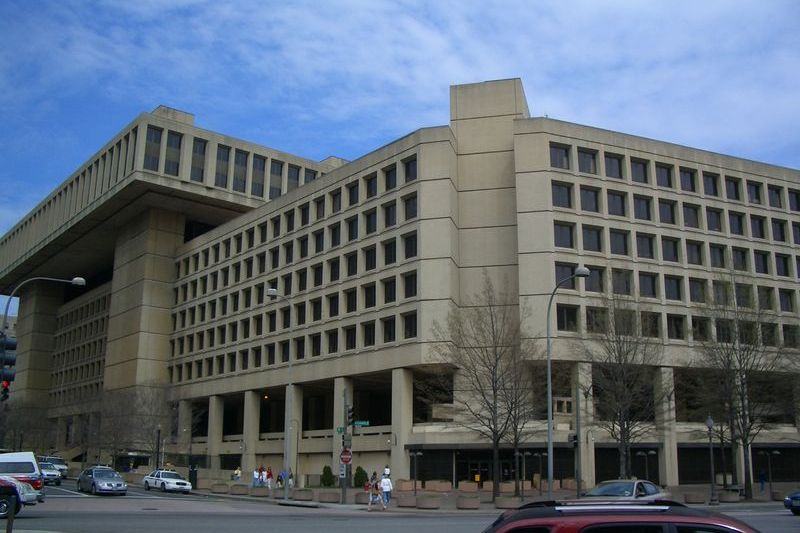
The FBI buys your location data. Not through a warrant. Not through a court order. Through the same commercial marketplace that helps advertisers sell you running shoes after you jog past a sporting goods store.
FBI Director Kash Patel confirmed as much during a Senate Intelligence Committee hearing on Wednesday, responding to a direct question from Senator Ron Wyden about whether the bureau would commit to not purchasing Americans’ location data. Patel’s answer was blunt: “The FBI uses all tools, Senator, thank you for the question, to do our mission. We do purchase commercially available information that’s consistent with the Constitution and the laws under the Electronic Communications Privacy Act.”
Translation: yes, and we think it’s legal.
Wyden called the practice “an outrageous end run around the Fourth Amendment” and flagged the compounding danger of pairing bulk location data with artificial intelligence to comb through it. He’s not wrong about the scale. Every smartphone with location services enabled — which is most of them — generates a continuous stream of GPS coordinates that flows through a chain of apps, SDKs, aggregators, and data brokers before landing in databases that anyone with a budget can access. Including the FBI.
The Ad-Tech-to-Surveillance Pipeline
The mechanism is worth understanding, because it’s the gap between what people think is happening with their data and what actually is.
When you install a weather app or a mobile game, it often requests location permissions. Grant them, and your coordinates get packaged into an advertising profile — ostensibly so you can receive geographically relevant ads. That data passes through a supply chain of ad-tech intermediaries, eventually reaching data brokers who aggregate location histories from millions of devices and sell access to them.
The buyers are supposed to be marketers. Increasingly, they’re federal agencies.
FBI privacy documents have referenced tools like Babel Street and ZeroFox for open-source information gathering. The Defense Intelligence Agency, pressed at the same hearing, was less forthcoming — DIA Director Lt. Gen. James H. Adams III declined to answer directly but insisted the agency’s practices “align with constitutional protections.” A declassified 2022 report from the Office of the Director of National Intelligence revealed that the DIA had funded another agency to purchase commercially available geolocation metadata from smartphones, processing global data to identify U.S. location points and segregating them into separate databases.
The constitutional logic the government relies on is a loophole, not a settled legal doctrine. The FBI’s position is that because data brokers sell this information on the open market, no warrant is required to buy it. This theory has not been definitively tested in court, as Alan Butler of the Electronic Privacy Information Center has noted. It sits in tension with the Supreme Court’s 2018 Carpenter v. United States decision, which held that the government needs a warrant to obtain cell-site location records from carriers. The DIA has explicitly stated it “does not construe the Carpenter decision to require a judicial warrant” for purchasing commercially available data — a reading that privacy advocates consider a stretch.
What Changed — and What Didn’t
Patel’s predecessor, Christopher Wray, told Congress in 2023 that the FBI was not, to his knowledge, purchasing commercial location data. Patel’s testimony represents either a policy reversal or a shift in candor. Either way, the surveillance is happening now.
Congress is not silent on this. The Fourth Amendment Is Not For Sale Act passed the House with bipartisan support, mandating court orders before agencies can purchase personal data from brokers. It awaits Senate action. Meanwhile, Wyden, along with Senators Mike Lee, and Representatives Warren Davidson and Zoe Lofgren, introduced the broader Government Surveillance Reform Act, which would close the data broker loophole and require warrants for accessing Americans’ communications collected under FISA Section 702.
Wyden cited Patel’s testimony as “Exhibit A” for why the legislation is needed.
The Price of Convenience
The uncomfortable reality is that the surveillance apparatus the FBI just confirmed using runs on infrastructure built to serve you targeted ads. The same data pipeline that knows you lingered outside a pet store for nine minutes on Tuesday can tell a federal agent the same thing. No warrant required. No notification sent. The transaction is commercial, invisible, and — for now — perfectly legal.
Your phone is the informant. You agreed to it in a terms-of-service document you didn’t read.
Sources
- FBI is buying location data to track US citizens, director confirms — TechCrunch
- Kash Patel Admits the FBI is Buying Private Data on Americans — Gizmodo
- Kash Patel Brags That the FBI Is Buying Your Location Data — The New Republic
- FBI, DIA pressed on purchases of Americans’ phone location data — Biometric Update
- Sen. Wyden Calls For Law Prohibiting Feds From Buying Data — MediaPost
- Wyden, Lee, Davidson and Lofgren Introduce Bill to Reform FISA Section 702 — Sen. Wyden Press Release