 lop News
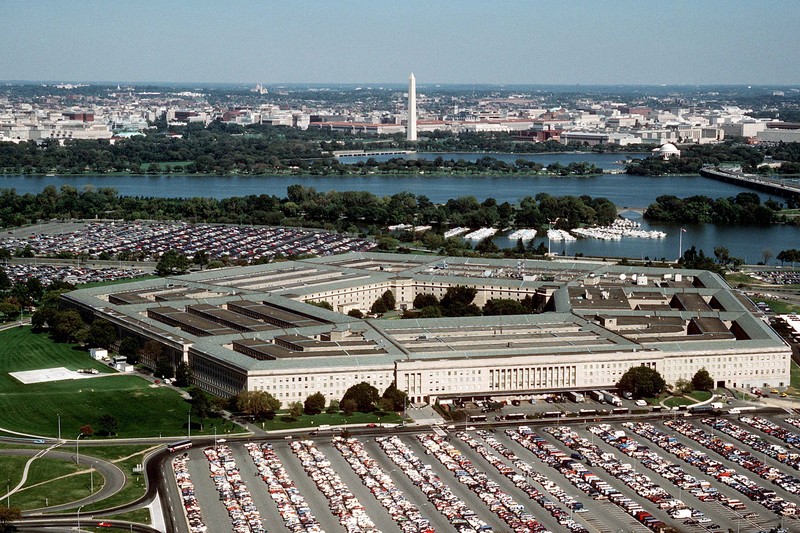
Seven New York Times reporters lost their Pentagon press badges last autumn. So did journalists from the Washington Post, CNN, NBC, NPR, the Associated Press, Agence France-Presse, and Fox News. Their offence was not a security breach. It was refusing to sign a policy that told them what they could and could not report.
On Friday, U.S. District Judge Paul Friedman struck that policy down.
The Policy and Its Reach
The credentialing rules, introduced under Defense Secretary Pete Hegseth in mid-October, required reporters covering the Pentagon to agree not to obtain or publish information that had not been officially cleared for release — even if the material was unclassified. Journalists who declined were denied the badges that grant routine access to the building. Eight news outlets were ordered to vacate their dedicated Pentagon office spaces. Official escorts were mandated for journalists outside limited designated areas.
Scores of organisations refused to comply. The list reads like a roll call of American journalism across every political stripe: the AP, Fox News, AFP, the New York Times, the Washington Post, CNN, NBC, and NPR. That breadth matters. When outlets that agree on almost nothing all walk out of the same building for the same reason, the issue is not partisanship. It is principle.
The Ruling
The Times sued in December, arguing the policy violated its journalists’ constitutional rights to free speech and due process. Judge Friedman agreed on both counts, finding the policy “unlawful because [it violates] the First and Fifth Amendments of the United States Constitution.”
His opinion was pointed. The policy, Friedman wrote, “fails to provide fair notice of what routine, lawful journalistic practices will result in the denial, suspension, or revocation” of credentials. He found “undisputed evidence” that the rules were designed to weed out “disfavored journalists” and replace them with those “on board and willing to serve” the government — a textbook case of viewpoint discrimination.
Friedman ordered the Pentagon to reinstate credentials for seven Times journalists immediately. The ruling applies to “all regulated parties,” meaning other affected outlets stand to benefit. The Pentagon has one week to file a compliance report.
Wartime Stakes
The timing sharpens everything. The United States launched military operations against Iran on February 28 and has conducted a recent incursion into Venezuela. The Pentagon — the nation’s largest employer, commanding a budget in the hundreds of billions — is running an active war while restricting who gets to ask questions about it.
Friedman addressed this directly. “It is more important than ever that the public have access to information from a variety of perspectives about what its government is doing,” he wrote, citing the Iran conflict and Venezuela operations by name. He invoked the constitutional framers: “Those who drafted the First Amendment believed that the nation’s security requires a free press,” a principle that “has preserved the nation’s security for almost 250 years.”
The argument that press restrictions protect military security is not new, and it is not always wrong. Operational details can endanger lives. But the Pentagon’s policy did not target specific leaks or named threats. It required blanket pre-agreement to report only what the government had already cleared — a prior restraint by another name.
What Comes Next
Pentagon spokesperson Sean Parnell said the department “disagrees with the decision and is pursuing an immediate appeal.” Friedman refused a request to suspend his ruling in the meantime, meaning credentials must be restored while the appeal proceeds.
The National Press Club called the decision “a decisive rebuke of an unlawful effort to restrict press access and a clear victory for press freedom.” Its president, Mark Schoeff Jr., added: “A free press does not operate at the government’s discretion.”
Appellate courts will have the final word, and the current Supreme Court has shown limited appetite for expanding press protections. But the trial court record is now set: a federal judge examined the Pentagon’s justification for restricting wartime press access and found it constitutionally bankrupt.
For the reporters who walked out last October — conservative and liberal, American and international — the ruling validates a gamble. They bet that refusing to comply would matter more than the access they lost. On Friday, a federal court agreed.
Sources
- US judge sides with New York Times against Pentagon journalism policies — Al Jazeera
- US judge rules restrictive Pentagon press access unconstitutional — South China Morning Post
- Judge sides with New York Times over policy that limited reporters’ access to Pentagon — NBC News
- Court Ruling Blocking Pentagon Press Restrictions Is a Victory for Press Freedom — National Press Club via PR Newswire