 lop News
Helium keeps MRI machines running, semiconductor fabs etching, and rockets fueled. It is also, as of three weeks ago, stuck in the Middle East with nowhere to go.
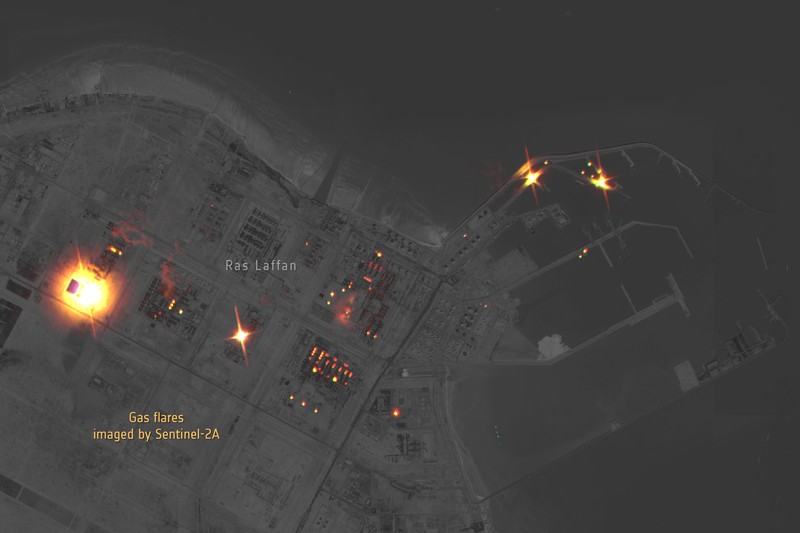
Qatar produces roughly 30% of the world’s helium supply, according to the U.S. Geological Survey — a byproduct of the natural gas operations at Ras Laffan Industrial City. When Iran’s drone and missile attacks forced state-owned QatarEnergy to halt production on March 2, that supply vanished. Fresh strikes last week caused what the company called “extensive” damage, cutting annual helium exports by 14% and pushing any restart timeline well beyond earlier hopes.
“Nobody’s run out of helium yet. But it’s a few weeks out when the shortage really hits,” Phil Kornbluth, president of Kornbluth Helium Consulting, told Fortune. Spot prices have already doubled, according to Kornbluth, with CNBC reporting increases of 70% to 100% in some markets.
Not Just Balloons
The applications that matter have nothing to do with party decorations. Chipmakers blow helium over silicon wafers during etching to draw heat away and keep temperatures stable — a step for which there is currently no viable substitute, according to Jong-hwan Lee, a professor of semiconductor devices at South Korea’s Sangmyung University. South Korea imports about 65% of its helium from Qatar, per Fitch Ratings, making Samsung and SK Hynix particularly exposed.
Hospitals depend on liquid helium to cool the superconducting magnets inside MRI scanners. Space companies use it to purge rocket fuel tanks. A prolonged shortage forces triage: semiconductors sit at the “top of the pecking order,” Kornbluth told CNBC, while Bank of America analysts noted that medical imaging is among several “high-value, mission-critical applications” where supply security is prioritized over price. Less critical users face steep cuts.
A Logistical Nightmare
Helium’s physics compound the problem. Its tiny molecules leak through the smallest gaps, so it must be chilled to liquid form and shipped in specialized containers that cost about $1 million each. Around 200 of those containers are currently stranded in the Middle East, according to Kornbluth. Repositioning them to alternative filling sites will take weeks.
Prior oversupply offers a modest cushion — the real deficit may be closer to 15% than 30%, Kornbluth estimates. But if Ras Laffan’s damage requires months or years of repair, as QatarEnergy’s latest statements suggest, the buffer won’t last. The gas that most people associate with squeaky voices may soon be rationed for the machines that scan your brain.