 lop News
The operation against Hezbollah “has only begun” and will be “prolonged,” Israel’s army chief declared Sunday, signaling that the escalating campaign in Lebanon is no limited strike but a sustained military offensive with potentially far-reaching consequences for civilians on both sides of the border.
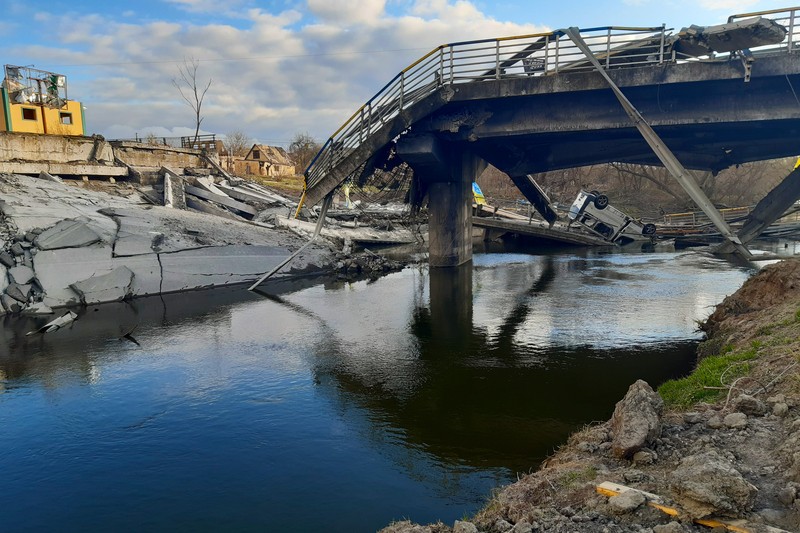
Lieutenant General Eyal Zamir’s statement came as Israeli forces struck the Qasmiyeh Bridge, a vital artery on Lebanon’s coastal highway linking the south to the rest of the country. The attack followed Defense Minister Israel Katz’s orders to destroy all crossings over the Litani River — roughly 30 kilometers north of the Israeli border — that Israel claims Hezbollah uses to move fighters and weapons.
“We are now preparing to advance the targeted ground operations and strikes according to an organized plan,” Zamir said. Israeli forces have already struck more than 2,000 targets and eliminated “hundreds of terrorists,” he claimed.
A Gaza-Style Campaign
The rhetoric and tactics bear unmistakable echoes of Israel’s approach in Gaza. Katz explicitly compared the Lebanon strategy to operations in Beit Hanoun and Rafah, where Israeli forces created buffer zones by demolishing buildings near the border. He has ordered the destruction of homes in Lebanese villages along the frontier to “neutralise threats” to Israeli communities.
Human Rights Watch researcher Ramzi Kaiss warned that destroying homes wholesale would amount to “wanton destruction,” which constitutes a war crime under international law. Even if bridges are used for military purposes, armed actors must weigh civilian harm, Kaiss told Reuters.
“If all these bridges are struck, and the region that is south of the Litani becomes isolated from the rest of the country, then the civilian harm is going to be so immense that you have a humanitarian catastrophe,” he said.
Iran’s Shadow
The latest escalation began March 2, when Hezbollah fired rockets into Israel two days after the joint U.S.-Israeli attack on Iran that killed Supreme Leader Ayatollah Ali Khamenei. Hezbollah described the salvo as retaliation for the killing and for what it called “repeated Israeli aggressions” in Lebanon despite a November 2024 ceasefire.
The group’s decision to enter the wider war startled many in Lebanon, including within its own Shiite base. But analysts note that Hezbollah — created in the 1980s with Iranian backing — faced an existential calculation: watch its patron collapse or join the fight.
“Iran was facing an existential threat, and Hezbollah is backed and funded and trained by the Iranian regime,” said Mohanad Hage Ali of the Carnegie Middle East Center in Beirut. “The collapse of the Islamic Republic would basically mean the death of Hezbollah as a project.”
The Human Toll
More than 1,000 people have been killed in Lebanon since March 2, according to the Health Ministry, including at least 111 children. Over one million have been displaced. The UN reports families sleeping in cars, on beaches, and in overcrowded schools-turned-shelters. Women and children account for roughly 40 percent of fatalities.
Lebanese President Joseph Aoun called the bridge strikes a “prelude to ground invasion” and “collective punishment against civilians” — part of what he described as “suspicious schemes” to establish a buffer zone and expand Israeli territory.
On the Israeli side, two soldiers have been killed in southern Lebanon, and one civilian died after what the military called a “launch” from Lebanese territory — the first Israeli civilian death linked to fire from Lebanon in the current conflict.
Diplomatic Dead Ends
Lebanon has proposed direct talks with Israel for the first time since the 1982 invasion, offering to disarm Hezbollah and requesting increased funding for Lebanese troops. But Beirut wants the fighting to end first — a condition Israel shows no sign of accepting.
The United States, which mediated previous ceasefires, appears preoccupied with the wider regional war. “There is no senior official in the White House focusing on Lebanon,” said Randa Slim of the Stimson Center. French Foreign Minister Jean-Noel Barrot expressed “reservations” about a ground operation of “significant scale and duration” after meeting his Israeli counterpart Friday.
For now, the diplomatic track leads nowhere. Israeli Foreign Minister Gideon Saar denied any talks were planned. The message from Jerusalem is clear: the operation has only begun.
Sources
- Israel to expand ground and air attacks against Hezbollah in Lebanon — BBC News
- Lebanon’s Aoun warns Israeli attack on bridge ‘prelude to ground invasion’ — Al Jazeera
- Army Chief: Israel to ‘Advance Targeted Ground Operations’ in Lebanon — Asharq Al-Awsat
- Fears of an all-out Israeli invasion mount in Lebanon — NBC News
- What to know about the resurgent war between Israel and Hezbollah in Lebanon — Associated Press
- Lebanon has proposed the first direct talks with Israel in decades. It might be too late — Associated Press
- Situation in Lebanon — UN Office of the High Commissioner for Human Rights
- ‘Perfect storm’: Lebanon crisis deepens as civilians bear the brunt — UN News