 lop News
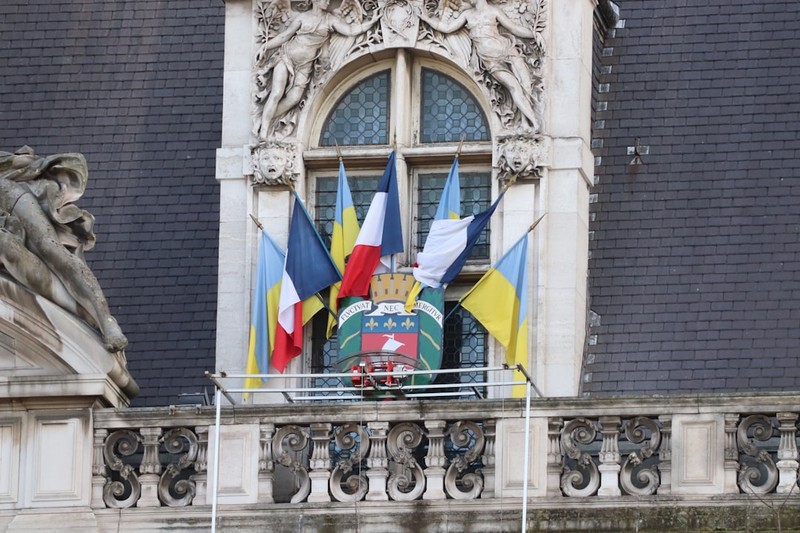
The results from France’s municipal elections tell two stories at once. In Paris, the left won decisively. In Nice, the far right walked through the door that mainstream conservatives opened for it.
Socialist Emmanuel Grégoire will become the next mayor of Paris after securing approximately 52 percent of the vote on Sunday, defeating conservative rival Rachida Dati and extending his party’s quarter-century hold on the French capital. In Nice, France’s fifth-largest city, Eric Ciotti — a former mainstream conservative who now leads a party allied with Marine Le Pen’s National Rally — defeated the incumbent center-right mayor, putting a far-right-aligned politician in charge of the Mediterranean port city for the first time in decades.
The geographic split captures the central tension of French politics a year before the 2027 presidential election: traditional parties have reasserted control in major urban centers, while the far right consolidates its grip on provincial France and finds new pathways to power through alliances with defecting conservatives.
The urban firewall holds
Grégoire’s victory in Paris was never really in doubt after the first round, where he led Dati by twelve points. But the margin of his win — exit polls credited him with 51 to 53 percent — exceeded expectations and delivered an unmistakable message.
“Paris is not, and never will be, a far-right city,” Grégoire declared in his victory speech, addressing Dati’s decision to accept support from the National Rally in the runoff.
The 48-year-old former deputy to outgoing Mayor Anne Hidalgo now inherits a city transformed by 25 years of left-wing governance — bike lanes, pedestrian zones, and tree-lined boulevards that have drawn both praise and fury. He cycled to City Hall on a Vélib’ rental bike after his victory, a gesture of continuity with the Hidalgo era even as he promises a more conciliatory style.
The pattern repeated across France’s largest cities. In Marseille, incumbent Socialist Benoît Payan won re-election with 56.3 percent of the vote, defeating a National Rally challenger who had polled competitively in the first round. Lyon and Lille also returned left-wing administrations.
The provincial breach
But the map looks different outside the metropolises.
In Nice, Ciotti’s victory represents something new: a former leader of the mainstream Republican party who has openly allied with Le Pen, winning France’s fifth-largest city not as an insurgent but as a legitimate right-wing coalition candidate. National Rally president Jordan Bardella hailed it as evidence of an “emerging new right” no longer constrained by the taboo against cooperation with Le Pen.
The far right also captured left-wing bastions in provincial France — Carcassonne, Castres, Vierzon, and Liévin among them. Bardella claimed the party had achieved its “greatest breakthrough” in municipal history, electing councilors in constituencies where it previously had no presence.
Yet the National Rally fell short in the cities it had identified as top targets. In Toulon, where the RN candidate led the first round by thirteen points, center-right rival Josée Massi won the runoff with 53.5 percent after opponents consolidated against the far right. In Nîmes, a similar dynamic played out.
The results suggest the “Republican Front” — the longstanding practice of mainstream parties uniting to block the far right — remains resilient in large urban centers, even as it weakens in smaller towns.
The center’s calculations
For President Emmanuel Macron’s struggling centrist movement, the elections offered one significant victory: Thomas Cazenave, a former minister, defeated the incumbent Green mayor in Bordeaux.
More consequential for 2027 was Édouard Philippe’s re-election in Le Havre. The former prime minister, who served under Macron for three years, has emerged as a serious presidential contender in his own right. He framed his victory in national terms, telling supporters that “there were reasons to be hopeful” that French voters would “beat back extremist forces.”
The left’s LFI problem
The elections exposed a fault line within the left itself. In cities where Socialists allied with Jean-Luc Mélenchon’s hard-left France Unbowed (LFI) — Toulouse, Limoges, Clermont-Ferrand, Poitiers — the left lost. In Paris, Marseille, and Lille, where Socialists kept their distance, they won.
“My conclusion from tonight is that the LFI wins nothing — and what is worse it is the LFI that brings about defeat,” said Pierre Jouvet, the Socialist Party’s secretary-general.
The recriminations will matter. With Marine Le Pen potentially barred from the 2027 presidential race due to an embezzlement conviction, and with mainstream parties regaining their footing, the question of who can unite the anti-far-right vote — and who will alienate it — may determine France’s next president.
Sources
- Socialist Grégoire becomes Paris mayor as the far right wins Nice in key municipal elections — Associated Press
- France’s Socialists hold onto power in major cities in election boost for mainstream — BBC News
- French far right wins towns, loses in cities as mayoral vote kicks off race to succeed Macron — France 24
- Socialist Emmanuel Gregoire wins Paris mayoral race — Al Jazeera
- Emmanuel Grégoire elected Paris mayor, succeeding fellow left-winger Anne Hidalgo — France 24