 lop News
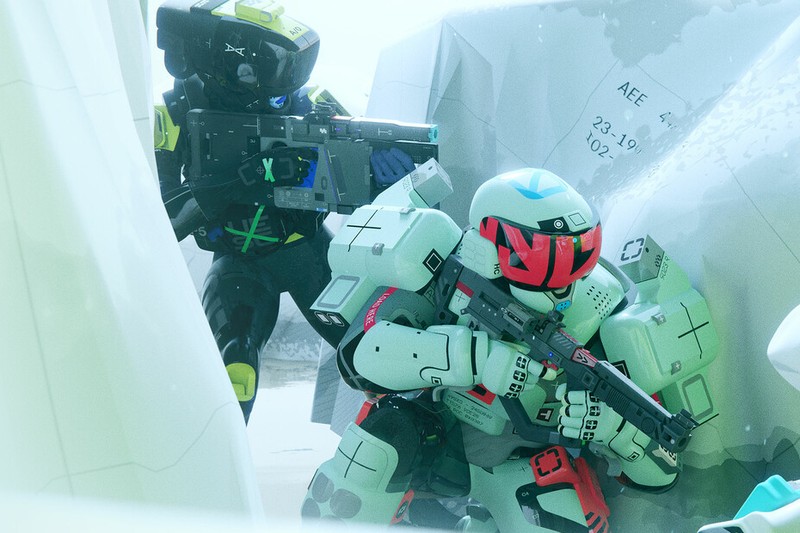
The internet had already written Marathon’s obituary. Bungie, the studio behind Halo and Destiny, was pivoting to extraction shooters — a crowded genre dominated by Escape From Tarkov and last year’s breakout hit ARC Raiders. Early alpha impressions were mixed. The YouTuber commentariat was skeptical. After Sony’s Concord collapsed in two weeks and Highguard died in under two months, another live-service shooter felt like a guaranteed flop.
Except it wasn’t.
Marathon launched March 5 with 88,000 concurrent players on Steam. As of March 23, it’s sitting at 49,901 concurrents — a healthy retention curve by live-service standards — and holds a “Very Positive” rating with 89% of 28,509 reviews positive. It’s the #6 top seller on Steam at $39.99. On PlayStation, it boasts a 4.77 rating from 3,000 reviews.
The gap between expectation and reality is staggering. So what did Bungie actually get right?
Gunplay That Sets the Standard
If you’ve played Destiny, you know the feeling. Bungie’s weapon feedback is arguably the best in the industry — that crisp snap of a rifle report, the hollow thud when rounds connect, the theatrical kick of a hand cannon. Marathon inherits that DNA completely.
IGN’s preview captured it perfectly: weapons have a “deliberate musicality.” Recoil feels rhythmic. Enemy shields crack and splinter. The near-invisible bullet magnetism makes you feel slightly better than you actually are. An old Bungie developer once said the secret to a great shooter is making four seconds of perfect gameplay, then repeating it. Marathon nails those four seconds.
This matters enormously in extraction shooters, where every firefight carries stakes. Lose, and your loot is gone. Win, and you extract with gear ripped from another player’s cold hands. The tension of squad-vs-squad battles in Marathon’s claustrophobic hallways produces some of the most intense firefights in the genre — precisely because the gunplay is this good.
Aesthetic That Burns Into Your Retina
Marathon doesn’t look like anything else on the market. The art direction is harsh, neon-soaked, deeply unsettling — a cyberpunk nightmare of transhumanist body horror and artificial landscapes that feel wrong in ways that are hard to articulate.
After a dozen hours in a single day, one reviewer noted they felt like they were “losing their mind from prolonged exposure.” That’s not a criticism. That’s the point.
Loading screens show unsettling metaphors for immortality. Environments have an odd, artificial quality. The whole package is arresting in a way most big-budget games never achieve. When your extraction shooter is competing for attention against established titans, being visually unforgettable matters.
Learning From the Corpses
Marathon benefits from spectacular timing — and not just because it launched after Concord and Highguard demonstrated exactly how not to do this.
The extraction shooter subgenre is having a renaissance. ARC Raiders proved last year that the high-stakes loot-and-extract loop could find a mainstream audience. Marathon arrived into a heated market, but one where players already understood the appeal.
More importantly, Bungie spent a dozen years running Destiny — a trailblazing live-service shooter that taught the industry hard lessons about content cadence, player retention, and the grind. That institutional knowledge shows. Progression feels fast. Even failed runs advance your goals somehow. The “one more run” compulsion is dialed in.
The studio is also trying something unconventional: seasonal vault resets. Every new season, everyone’s loot gets wiped. The stated goal is accessibility — new players never feel hopelessly behind. Whether players will accept their hard-earned gear disappearing quarterly remains to be seen, but it’s a bold response to Destiny 2’s infamous new-player hostility.
The Sword of Damocles
Here’s the uncomfortable truth: none of this guarantees Marathon survives.
The live-service business doesn’t reward quality alone. Highguard hit 100,000 concurrents at launch and was dead in 50 days. Concord was reportedly decent and lasted two weeks. These games are investments expected to deliver staggering returns, and when they don’t, funding evaporates.
Marathon has a stronger foundation than most — 89% positive reviews, solid retention, elite gunplay, unmatched aesthetics, and a studio with live-service experience. But the numbers it needs to hit are unknown. Bungie fired 220 employees in 2024. Sony’s live-service strategy has been a bloodbath. At any moment, the math could change.
For now, Marathon is winning. The haters were wrong. Bungie built something special. Whether it’s special enough to survive the economics of forever-games — that’s a question no review score can answer.
Sources
- Marathon Review So Far — IGN
- In the killer world of online gaming, there are no hits any more, just survivors — The Guardian
- Marathon PS5 User Reviews Remarkably Positive After String of Live Service Disasters — Push Square
- Marathon launches to 91% Positive reviews on Steam — htxt.africa
- Marathon Estimated to Already Have Nearly 250K Copies Sold on Steam, Launch Roadmap Revealed — Wccftech