 lop News
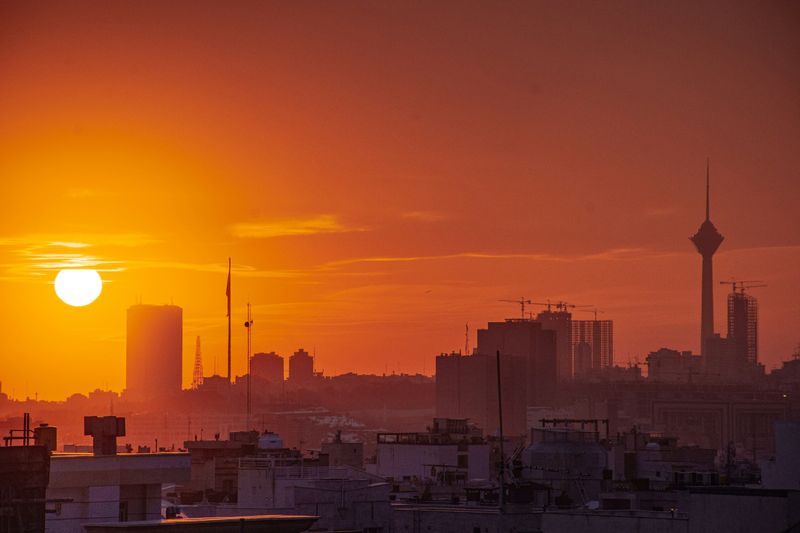
Nowruz arrived in Tehran at 10:46 a.m. on Friday — the vernal equinox, the ancient Persian moment of renewal. By nightfall, Israeli warplanes had begun what the IDF called “a wave of strikes targeting infrastructure of the Iranian terror regime in the heart of Tehran.” Iran answered with four missile salvos in rapid succession. Sirens sounded across East Jerusalem, where Palestinians were marking Eid. The Persian new year and the end of Ramadan fell together this year, and both opened to the sound of air raid warnings.
The exchange marked the 21st day of open war between Israel and Iran — a conflict that has killed at least 1,300 Iranian civilians according to the Human Rights Activist News Agency, rattled global energy markets, and drawn in military targets across at least six countries. The symbolism of the timing was not subtle. Two days earlier, Prime Minister Benjamin Netanyahu had addressed the Iranian people directly from the Kirya military headquarters, urging them to go out and celebrate the holiday. “We are watching from above,” he said. On Friday, what watched from above were missiles.
The South Pars Calculation
The most consequential development of the past 48 hours was not a strike but a pause. On Wednesday, Israeli forces hit Iran’s South Pars gas field — the largest natural gas reserve on the planet — and the neighboring Asaluyeh processing complex. The strike was unmistakable escalation. It was also, according to Netanyahu, a unilateral one.
“Israel acted alone against the Asaluyeh gas compound,” he said. “President Trump asked us to hold off on future attacks, and we’re holding off.”
Trump’s version was blunter. “I told him, ‘Don’t do that,’” he said, insisting he had neither approved nor agreed to the operation. But CNN reported that an Israeli source described the strike as coordinated with the United States, while an American source said Washington had been “aware” of it. The contradiction speaks to a fracture that US intelligence officials have now acknowledged openly: American and Israeli war objectives in Iran are not aligned.
Israel’s withdrawal from South Pars reads less like restraint than recalibration. The strike demonstrated capability. The pause, made at Washington’s request, preserves the alliance without conceding strategic ground. Netanyahu gets to say he hit the target. Trump gets to say he set the limits. Neither has committed to ending the war.
The Gulf Becomes the Battlefield
Iran’s retaliation was precise in its targeting and sweeping in its geography. In the 48 hours following the South Pars strike, Iranian missiles and drones hit Qatar’s Ras Laffan LNG facility — the backbone of Qatar’s gas exports — reducing the country’s liquefied natural gas capacity by an estimated 17 percent. Qatar’s energy minister put the annual revenue loss at $20 billion and warned that repairs could take three to five years, disrupting supplies to Europe and Asia for the foreseeable future.
Kuwait’s Mina Al-Ahmadi refinery, capable of processing 730,000 barrels per day, was set ablaze. Saudi Arabia’s SAMREF refinery in Yanbu was struck. An Israeli oil refinery in Haifa sustained damage. Air defenses over Dubai intercepted incoming fire. Northern Israel activated shelter systems for millions of civilians across Haifa and the Galilee.
The economic fallout has been staggering. Brent crude has breached $119 per barrel — up 60 percent since the war began on February 28. European natural gas benchmarks have roughly doubled in a month. Average US gasoline prices have climbed from under $3 to $3.88 per gallon. EU leaders have called for the reopening of the Strait of Hormuz, through which one-fifth of the world’s oil transits — but the country controlling the strait is under active bombardment, and calling for something and achieving it are different matters entirely.
Threats and Counter-Threats
The rhetorical escalation has matched the military one. Iranian Foreign Minister Abbas Araghchi warned that Tehran had used only a “fraction” of its firepower and promised “zero restraint” if Iranian energy infrastructure is targeted again. Trump countered that the United States would “massively blow up the entire South Pars Gas Field” if Iranian strikes on Qatari energy facilities continued — a threat that, if carried out, would devastate the very asset Israel just agreed to stop hitting.
The Pentagon is seeking $200 billion from Congress to fund operations with no defined timeline. Trump has ruled out ground troops but not further escalation. Lebanon’s president has proposed a ceasefire initiative, but with over 1,000 people killed in Israeli strikes on Lebanon since March 2, the prospects for a diplomatic opening appear thin.
The Question Neither Side Will Answer
Three weeks in, the central question is whether either side has a theory of how this ends.
The war’s opening salvo killed Ayatollah Ali Khamenei. Iran is now led by his son — an untested successor presiding over a military that has been degraded but not destroyed, and a population that is angry at both its own regime and the bombs falling from outside. Director of National Intelligence Tulsi Gabbard confirmed this week that Iran has “maintained the intention to rebuild its nuclear enrichment capability” — a statement that functions less as intelligence assessment and more as justification for whatever comes next.
Iran retains the capacity to inflict pain on global energy markets in ways no amount of air power can prevent. Every refinery in the Gulf is within drone range. The Strait of Hormuz remains effectively closed to commercial traffic. The war has already caused what analysts describe as the largest disruption to global energy supply since the 1970s.
On the ground in Tehran, Nowruz tables were set despite everything. NPR correspondents described families arranging Haft-Sin spreads — the seven symbolic items of the new year — in apartments where the windows shake from overnight strikes. Streets were largely deserted, patrolled by Basij militia, some of them teenagers carrying guns. Security forces had banned public celebrations. A 49-year-old fashion designer told NPR she no longer leaves her house.
Netanyahu told Iranians to celebrate. He did not say when it might be safe to do so.
Sources
- Israel strikes Tehran as Iran continues targeting energy infrastructure across Gulf — Euronews
- Israel and Iran exchange strikes on Persian New Year as war jolts energy markets — Euronews
- Iran war live: Tehran warns of intensified strikes if energy sites targeted — Al Jazeera
- Iran war: Israel striking ‘infrastructure’ across Tehran — Deutsche Welle
- Live Updates: Iran war escalates, energy prices spike — CBS News
- Fear, defiance, and anger: Iranians describe life under bombardment — NPR
- Netanyahu tells Iranians to celebrate Nowruz: ‘IDF is watching from above’ — Jerusalem Post
- Trump threatens to ‘massively blow up’ South Pars gas field — CNBC
- Amid conflict and fear, Nowruz has taken on a different meaning for Iranians — CNN