 lop News
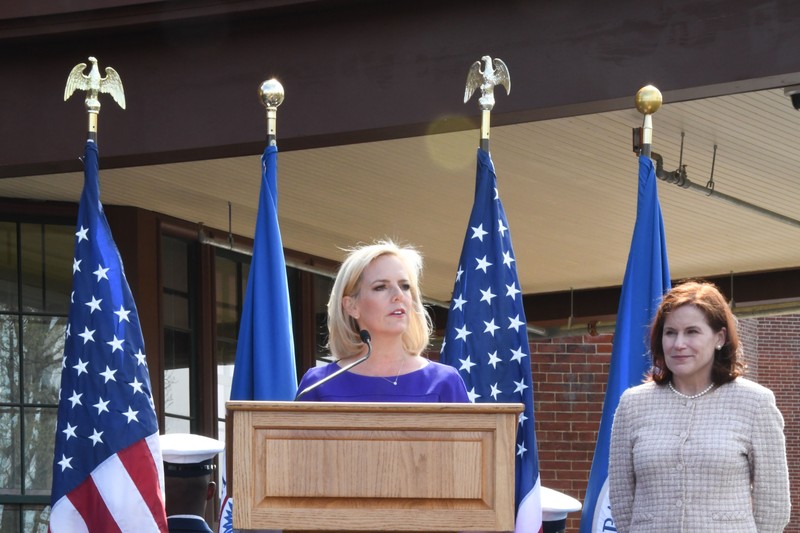
The Senate confirmed Markwayne Mullin as homeland security secretary on Monday, installing a former professional fighter and plumber at the helm of a 260,000-employee department where workers are entering their sixth week without pay.
The 54-45 vote split largely along party lines, with one Republican—Rand Paul of Kentucky—opposing Mullin over what he called the nominee’s history of “applauding violence.” Two Democrats, John Fetterman of Pennsylvania and Martin Heinrich of New Mexico, broke with their party to support confirmation.
Mullin replaces Kristi Noem, the former South Dakota governor whom President Donald Trump fired earlier this month after mounting criticism of her leadership. He arrives at a department paralyzed by a funding standoff that has stretched airport security lines and emptied the paychecks of workers responsible for the nation’s borders, disaster response, and transportation security.
A different kind of secretary
If Mullin’s background is unconventional for a Cabinet post, the administration appears to see that as a feature rather than a bug. Before entering politics, Mullin ran a plumbing business in Oklahoma and competed in mixed martial arts. He has been one of Trump’s most visible allies in the Senate, frequently appearing on conservative media to defend the president’s agenda.
“My goal in six months is that we’re not in the lead story every single day,” Mullin told senators during his confirmation hearing.
That aspiration reflects the turbulence DHS has endured under Noem, who drew bipartisan criticism for her handling of enforcement operations in Los Angeles, Chicago, and Minneapolis—where federal agents killed at least three American citizens during an immigration operation. Noem had described the dead men as perpetrators of “domestic terrorism,” a claim video evidence contradicted.
Mullin, by contrast, struck a more measured tone. He apologized for calling one of the men, Alex Pretti, “deranged” in the immediate aftermath of the shooting. “I shouldn’t have said that,” he acknowledged. “I was responding immediately without the facts. That’s my fault.”
He also signaled shifts in tactics. Mullin pledged that immigration agents would not enter homes or businesses without a judicial warrant—departing from the administrative warrants federal officers have used, which civil liberties advocates say skirt constitutional protections. He said he wanted Immigration and Customs Enforcement to become “more a transport than on the front line.”
The immediate crisis
Whatever policy adjustments Mullin contemplates, the shutdown that has gripped DHS since February 14 demands urgent attention. Democrats have blocked routine funding for the department to force concessions on immigration enforcement tactics, including a ban on masked officers and requirements that agents display identification.
The toll is mounting. More than 400 Transportation Security Administration officers have quit since the shutdown began, according to DHS figures. Nearly half had more than three years of experience. Callout rates at some airports have spiked: Houston Hobby recorded 51.5 percent on Friday, while JFK in New York hit 29.5 percent.
Travelers have noticed. Security lines have lengthened at airports across the country. The administration has deployed ICE agents to help with screening—a stopgap that underscores both the urgency and the political dimensions of the standoff.
“We have to get DHS funded,” Mullin told senators. “We have to realize that we’re putting our homeland and the peace of mind at risk for the American people.”
The White House has said it would wait for Mullin’s confirmation before resuming negotiations with Democrats. That process now begins in earnest.
Questions of temperament
Mullin’s confirmation was not without controversy. Paul, the ranking Republican on the Homeland Security Committee, cited Mullin’s past comments condoning a 2017 assault on Paul by his neighbor—an attack that left the senator with broken ribs and a damaged lung.
“I just wonder if someone who applauds violence against their political opponents is the right person to lead an agency that has struggled to accept limits to the proper use of force?” Paul asked.
Mullin also faced questions about remarks suggesting he had participated in classified military operations overseas. He told senators the details were classified, though the FBI said it had no record of such a trip. He agreed to discuss the matter in a classified setting.
Despite these concerns, Democrats Fetterman and Heinrich offered support. Heinrich, who served with Mullin in the House, called him a “friend” who “is not someone who can simply be bullied into changing his views.”
Mullin’s confirmation creates a vacancy in the Senate that Oklahoma Governor Kevin Stitt, a Republican, will fill by appointment. A special election will be held in November.
Sources
- Senate approves Trump’s Homeland nominee with immigration crackdown under scrutiny — Channel News Asia
- US Senate confirms Markwayne Mullin as homeland security chief — BBC News
- Markwayne Mullin confirmed as the next secretary of Homeland Security — NPR
- Markwayne Mullin confirmed to lead a DHS in turmoil — CNN
- More than 400 TSA officers have quit since shutdown began — NBC News
- Senate confirms Trump loyalist Markwayne Mullin as homeland security secretary — The Guardian
Discussion (9)