 lop News
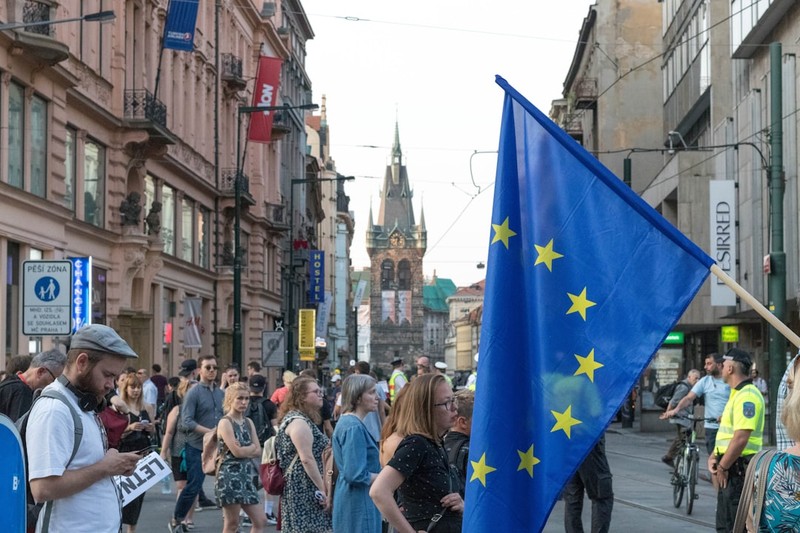
An estimated 200,000 people filled Prague’s Letná Park on Saturday, the same ground where crowds helped bring down the Communist regime in 1989, to protest what they see as a slide toward authoritarianism under Prime Minister Andrej Babiš.
The immediate trigger: a draft “foreign agent” law that would compel organizations and individuals with foreign ties or funding to register with the state or face fines of up to 15 million crowns (€612,000). According to Simon Panek, executive director of the Czech Republic’s largest NGO, People in Need, roughly “70% to 80% of the instruments and measures of the first draft” mirror Russia’s own foreign agent legislation, as he told Deutsche Welle.
A Familiar Playbook
The lineage is not subtle. Russia’s foreign agent law has been the template for similar efforts across the region. Hungary’s 2017 version was struck down by the European Court of Justice. Slovakia’s iteration, introduced by Robert Fico’s government in June 2025, lasted only until December before its Constitutional Court killed it. Now Prague.
“This labelling of civil society organizations is one of the most well-known tools of illiberal and authoritarian regimes,” Andras Lederer, head of advocacy at the Hungarian Helsinki Committee, told DW. Katarina Batkova of Slovak NGO Via Iuris was blunter: “It is a Russian law.”
Babiš has rejected the comparison. “This has nothing to do with Russia,” he told lawmakers last week, framing the bill as a check on political NGOs rather than an attack on civil society. His ANO party lawmaker Radek Vondráček argued that foreign funding puts “some pressure group or lobbying group on steroids.”
Not Just the Law
The rally’s grievances extended beyond the bill. Protesters cited parliament’s recent refusal to lift Babiš’s immunity in a $2 million fraud case involving EU subsidies, plans to restructure public media funding, and a foreign policy pivot away from Ukraine and toward the orbit of Hungary’s Viktor Orbán and Slovakia’s Fico, according to the Associated Press.
“We’re here to clearly stand against dragging our country onto the path of Slovakia and Hungary,” organizer Mikuláš Minář of A Million Moments for Democracy told the crowd.
The government insists the draft is a discussion document, not a finished bill. But 200,000 people on Letná Plain suggests the discussion has already moved to the streets.
Sources
- Czechs plan major rally as MPs mull ‘foreign agent’ law — Deutsche Welle
- Tens of thousands of protesters rally in Prague against new government of Czech prime minister Babiš — Associated Press via ABC News