 lop News
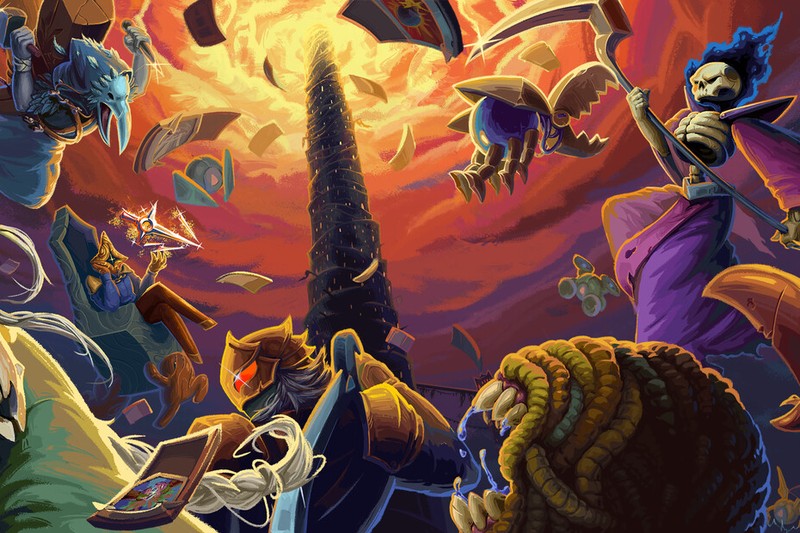
574,638 concurrent players. That’s the number Slay the Spire 2 put up on Steam last Sunday — within striking distance of Hollow Knight: Silksong’s 587,150 record from last year.
Let that sink in. A deckbuilding roguelike, a niche that was practically invented by its predecessor, nearly beat one of the most anticipated platformers of the decade on launch day.
Video Game Insights estimates 2.8 million units sold in the first week, generating roughly $55.1 million in revenue at a $24.99 price point. The game sits at #4 on Steam’s Top Sellers chart with 96% positive reviews from over 34,000 players. One Steam review called it “absolute cinema,” and honestly? They’re not wrong.
Evolution, Not Revolution
Here’s what makes Slay the Spire 2’s launch so impressive: Mega Crit didn’t try to reinvent the wheel. They just made the wheel better.
The core loop is identical — draft a deck, climb a spire, die horribly, try again. But the original trio of characters (Ironclad, Silent, Defect) have been reworked with new mechanics that open fresh build paths. The Silent now has “Sly” cards that trigger effects when discarded, a direct nod to Monster Train’s Offering system. The sequel is noticeably less dependent on energy upgrades, which were often run-defining in the original.
Two new classes round out the roster. The Necrobinder brings a Doom mechanic that lets you attack from both sides of an enemy’s health bar simultaneously, plus a skeletal sidekick named Osty who serves as both shield and scaling damage dealer. The Regent is the wild card — a starfish-faced royal whose Star currency system can produce screen-melting damage combos once you figure out the rhythm. Some players call him their new favorite; others spent 40 runs before their first win.
That difficulty spike is real. IGN’s early access review notes the game feels tuned for hardcore veterans right now — the exact crowd who’d crawl over broken glass to playtest a Slay the Spire sequel. Elite enemies hit harder. Health is persistent. The greedy “fight every miniboss” strategy that dominated the original’s Daily Climb doesn’t work anymore. You have to pick your battles.
The Co-op Curveball
The real headline feature is four-player co-op, and it’s genuinely transformative. Combat becomes real-time chaos — everyone plays cards simultaneously, which means attacks get wasted on already-dead enemies unless you’re coordinating over voice chat. Enemy HP scales dramatically to compensate for four damage dealers, so focus fire becomes essential.
The implementation is smart. Downed players revive at 1HP after battle. You get relic drops equal to player count, letting you distribute gear strategically. Each character has multiplayer-specific support cards. You can even draw on the map together — practical for route planning, apparently also great for doodling.
The only miss: if someone drops mid-run, your options are save-and-quit or abandon the entire game. No AI takeover, no continued play with a bot. For runs that can stretch an hour, that’s a real vulnerability.
The Godot Gamble Paying Off
Mega Crit switched engines for the sequel, moving from Unity to open-source Godot after publicly criticizing Unity’s ill-fated Runtime Fee policy in 2023. The Godot Foundation reported a “huge increase in popularity” following that controversy, and Slay the Spire 2 is now one of the highest-profile Godot releases to date.
The move clearly didn’t hurt them. The game performs flawlessly according to early reviews — the only real Early Access tells are placeholder art on some cards and a sketchy progression tree. The first major balance patch is already hitting the beta branch, targeting “infinites” (those degenerate zero-cost loops that break the game’s math) and rolling out Phobia Mode for players who’d rather not look at certain enemy designs.
What’s Next
Mega Crit isn’t committing to a roadmap, but expect a 1-2 year Early Access window similar to the original. The sequel currently has three acts and ten Ascension levels — the first game eventually shipped four acts and twenty Ascensions, so there’s clear room to grow. A fourth-act Architect boss is already teased, and the Steam page promises alternate act variants, new characters, and Workshop support.
43% of players are in China, matching the original’s geographic split almost exactly. This is a global phenomenon, not a Western indie success story.
For a genre that could have been a one-hit wonder, Slay the Spire 2 proves there was always more room to climb.
Sources
- Slay the Spire 2 hits nearly 575,000 concurrent players, almost beating Silksong’s record — GamesIndustry.biz
- Slay the Spire 2 Early Access Review — IGN
- Slay the Spire 2 reveals first major patch, with “huge” balance pass, Phobia mode, and adjusted classes and cards — Eurogamer
- Slay the Spire 2 roadmap - all updates coming in 2026 — PCGamesN
Discussion (10)