 lop News
Five billion euros. Eighty measures. Twenty million households. Three million companies. That is the price tag Spain’s government has put on insulating its economy from a war 4,000 kilometres away — and Prime Minister Pedro Sánchez wants you to know exactly what else that money could have bought.
“This is money that could have gone to scholarships, healthcare or social care,” Sánchez said on 20 March at an EU summit in Brussels, “but will instead be used to protect our economy.” He called the US-Israeli military campaign in Iran “illegal” and “destabilising,” then signed the cheque anyway.
What the Money Buys
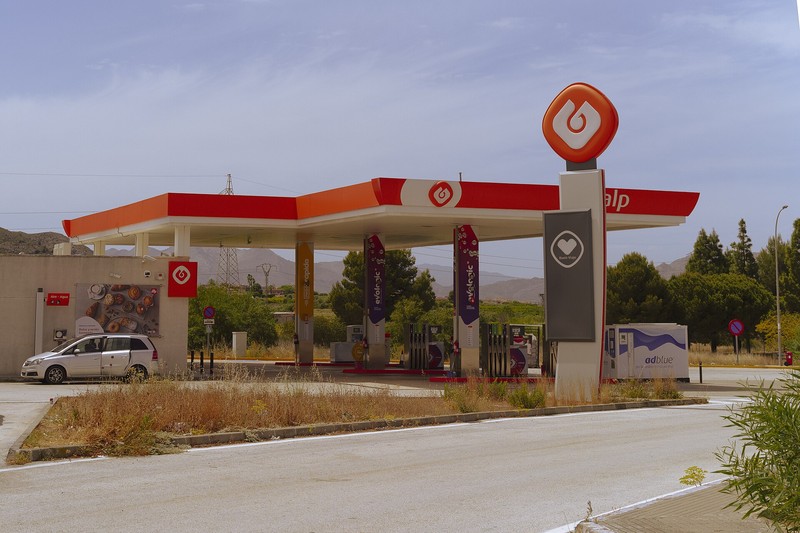
The package, which still requires Congressional approval, attacks energy costs from multiple angles. VAT on fuel drops from 21% to 10%, with excise duties on hydrocarbons cut alongside it. Drivers can expect savings of roughly €0.30 per litre at the pump. Butane and propane retail prices are frozen. VAT on electricity and natural gas falls to 10%, the indirect 5% electricity levy is reduced, and the tax on electricity production is temporarily suspended.
For industry, the government estimates energy-intensive businesses will save up to €200 million. On the social side, subsidised electricity rates for vulnerable households are strengthened and utility companies are banned from cutting off the most at-risk consumers.
A second pillar aims longer-term: tax deductions for solar panels, electric vehicle charging infrastructure, and heat pumps, plus expanded renewable storage. Sánchez framed this as the exit ramp. Spain has increased its renewable energy capacity by 150% over seven years, and gas now determines its electricity prices only 15% of the time — compared with 90% in Italy and 40% in Germany, according to government figures.
That last statistic matters. It means Spain is better positioned than most of its neighbours to weather this storm. It also means the storm is bad enough that even Spain needs €5 billion in emergency shelter.
From Tehran to the Petrol Station
The arithmetic connecting the Middle East to European wallets is blunt. Since the conflict began in late February, Brent crude has nearly doubled, climbing from roughly $60 a barrel to above $112. Iran’s closure of the Strait of Hormuz choked off an estimated 20% of global oil supply. Production from Kuwait, Iraq, Saudi Arabia, and the UAE dropped by at least 10 million barrels per day by mid-March, according to industry tracking data.
At the pump, the EU average petrol price rose 8% between late February and 9 March, from €1.64 to €1.77 per litre, according to Euronews. Germany saw a 14% spike to €2.07. Austria hit €1.71, up 13%. Hungary imposed a price cap of roughly €1.50 per litre for domestic vehicles — a blunter instrument, but an honest admission that markets alone will not protect voters from this.
Spain’s package is the largest single-country response so far, but it is not an outlier. Italy is redirecting extra VAT revenue from higher fuel prices back to consumers and leading a bloc of ten EU nations pushing to ease climate targets to lower energy costs. Germany has restricted petrol stations to a single daily price increase. The European Commission is debating whether to temporarily suspend the EU carbon market.
Every one of these measures costs money, political capital, or both.
The Fiscal Trap
Here is where the ledger gets uncomfortable. Spain, France, and Italy all carry government debt above 100% of GDP. When these same governments opened the chequebook during the 2022 Ukraine energy crisis, interest rates were lower and debt loads lighter. Neither condition holds today.
“Governments have the option of borrowing to fund subsidies, as many did in 2022,” noted an analysis in The Conversation, “but this is a less viable option than it was in 2022, as global interest rates are now higher.” The EU, one assessment concluded, “now faces a real risk of recession.”
Sánchez hinted at this constraint himself, saying additional resources could be deployed “if necessary” — the kind of conditional language that signals a treasury watching its margins.
The China Counterpoint
While European finance ministers scramble to borrow their way through the crisis, China is drawing on a different balance sheet. Beijing holds an estimated 1.2 billion barrels of crude in onshore stockpiles — roughly 108 days of import cover after accounting for domestic production. The country is 85% energy self-sufficient. President Xi Jinping reportedly said during a 2021 oilfield visit that China must secure its energy supply “in its own hands.”
That foresight now looks less like caution and more like competitive advantage. China’s renewable buildout, its strategic reserves, and its domestic production capacity mean it can absorb the Hormuz shock without writing emergency cheques to voters. European governments cannot say the same.
The Bill Keeps Running
Spain’s €5 billion is a cushion, not a cure. As long as the Strait of Hormuz remains contested and Middle Eastern oil stays offline, the pressure on European budgets will compound. Sánchez’s renewable pivot — the 150% capacity increase, the shrinking role of gas in Spanish electricity pricing — is the only element of the package that addresses the structural problem rather than the symptoms.
The rest is cash out the door, from Tehran to Madrid, paid for by a treasury that was already stretched. The next question is not whether other European governments will follow Spain’s lead. They will. The question is how many rounds of this they can afford.
Sources
- Spain unveils €5 billion energy package with tax cuts to offset Iran war costs — Euronews
- Spanish premier unveils $5.7B plan to cope with ‘illegal’ Iran war — Middle East Monitor
- War in Iran: Where in Europe have petrol prices spiked? — Euronews
- Iran oil shock: the EU has very few options to limit the war’s economic impact — The Conversation
- China has been preparing for a global energy crisis for years — The Guardian