 lop News
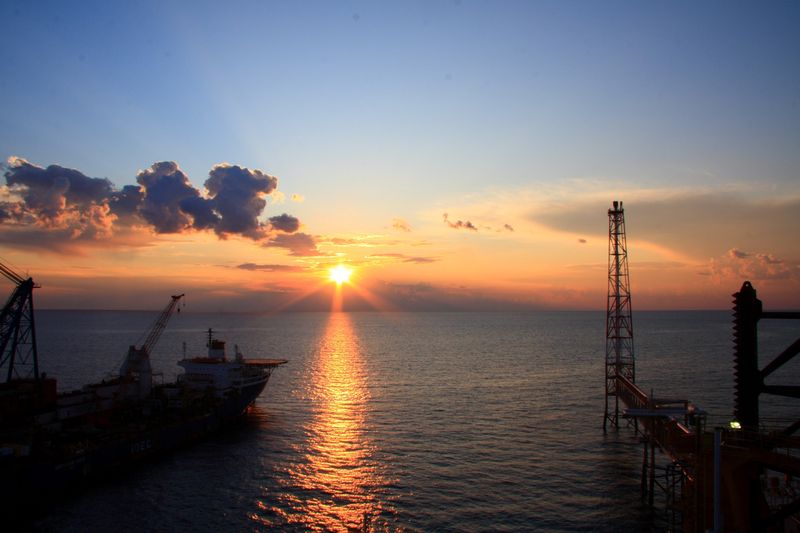
South Pars holds an estimated 1,800 trillion cubic feet of natural gas — roughly as much recoverable reserves as every other gas field on the planet combined. On March 18, Israeli air forces struck it.
The attack on the world’s largest natural gas field, which Iran shares with Qatar across a single geological formation in the Persian Gulf, marks the most significant escalation since the US-Israeli campaign against Iran began on February 28. It also crossed a line that energy analysts and Gulf diplomats had treated as unthinkable: the deliberate targeting of shared energy infrastructure in one of the most resource-rich corridors on Earth.
What Was Hit
Iran’s Ministry of Petroleum confirmed that gas tanks and sections of a refinery associated with the South Pars field were damaged, with fires subsequently brought under control. Workers at the facility, located off the coast of Bushehr province in southern Iran, were evacuated. Iranian gas exports to Iraq were halted immediately after the strike, according to The National.
Israel did not officially claim the operation, though Israeli media widely reported that the air force conducted it. Defense Minister Israel Katz offered no confirmation but promised additional “surprises.” Unnamed sources told the Associated Press that the United States was informed beforehand but did not participate.
Tehran’s Calculus
Iran’s response was swift and deliberately symmetrical: if energy infrastructure is now a legitimate target, Tehran would treat it as such across the Gulf.
Within hours, Iranian authorities announced via the Tasnim news agency that five facilities in three countries would be struck: Saudi Arabia’s SAMREF refinery and Jubail petrochemical complex, the UAE’s Al Hosn gas field, and Qatar’s Ras Laffan refinery and Mesaieed petrochemical complex.
Iran followed through. Missiles hit Qatar’s Ras Laffan Industrial City — home to the world’s largest liquefied natural gas export facility — causing what QatarEnergy described as “extensive damage” and sparking fires. The UAE’s Habshan gas facility and Bab field were also struck. Saudi Arabia intercepted four ballistic missiles and destroyed one drone, though its Eastern Province, home to the kingdom’s richest oil fields, came under attack alongside targets in Kuwait and Bahrain.
The Shared Field Problem
What makes the South Pars strike strategically distinct is the geology. The field spans 9,700 square kilometers of seabed, with Iran’s portion — South Pars — covering 3,700 square kilometers and Qatar’s — the North Dome — occupying the remaining 6,000. They are the same reservoir. Strike one side, and you threaten infrastructure that underpins the energy economy of both nations.
Qatar’s Foreign Ministry spokesman Majed al-Ansari called the attack “a dangerous and irresponsible step,” noting that the South Pars field extends into Qatar’s North Field. A senior Saudi diplomat told reporters that “what little trust there was before has completely been shattered.”
Energy Fallout
The strikes sent energy markets lurching. Brent crude climbed approximately 5% to above $108 per barrel. US diesel prices exceeded $5 per gallon for the first time since 2022.
The Strait of Hormuz — through which roughly one-fifth of global oil and liquefied natural gas transits daily — remains restricted under Iranian pressure, compounding supply fears.
The Signal
The shift from military to energy targets represents a calculated escalation on both sides. Israel struck South Pars to demonstrate that Iran’s economic lifeline is reachable. Tehran responded by demonstrating that the Gulf states hosting US military infrastructure are equally vulnerable — and that their energy exports can burn too.
Iranian President Masoud Pezeshkian warned of “uncontrollable consequences” that “could engulf the entire world.” President Trump, meanwhile, distanced the US from the South Pars strike but issued his own threat: if Iran continues attacking Qatar’s energy infrastructure, the United States would “blow up” South Pars entirely.
French President Emmanuel Macron called for “a moratorium on strikes targeting civilian infrastructure.” No party has indicated willingness to observe one.
The conflict that began as a military campaign now runs through the pipelines that heat European homes and power Asian factories. That is a different kind of war.
Sources
- Iran threatens to strike Gulf energy facilities after South Pars attack — Al Jazeera
- Strikes hit world’s largest natural gas field in Iran, and Tehran retaliates with more attacks — AP News
- Iran hits Qatar energy hub after its Pars oil field struck — CBC News
- Iran’s giant South Pars gas field struck by Israel in ‘dangerous escalation’ — The National
- Trump warns to ‘blow up’ South Pars gas field — CNBC
- South Pars/North Dome Gas-Condensate field — Wikipedia