 lop News
Computing’s most prestigious prize now belongs to two scientists who, four decades ago, realized that the weirdness of quantum mechanics could solve one of civilization’s oldest problems: how to keep a secret.
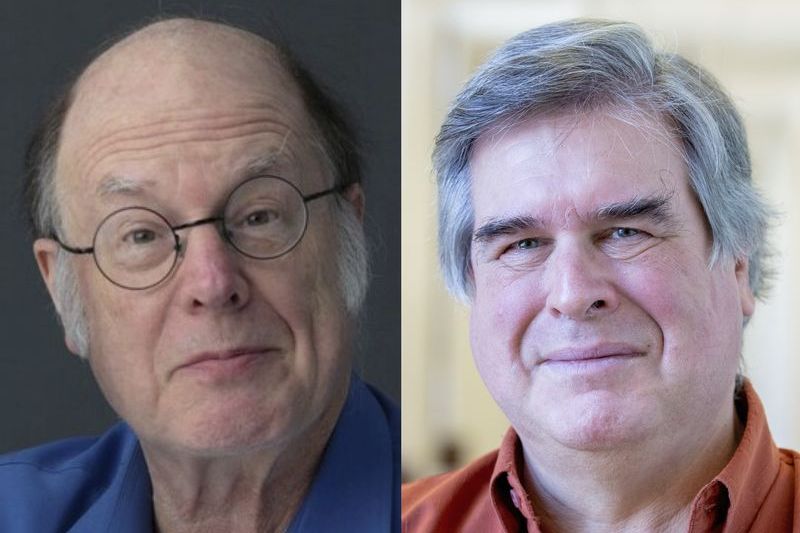
Charles H. Bennett, an 82-year-old physicist at IBM Research, and Gilles Brassard, a 70-year-old computer scientist at the Université de Montréal, were named recipients of the 2025 ACM A.M. Turing Award on Wednesday. The prize — often called the Nobel of computing — comes with $1 million and recognizes their “essential role in establishing the foundations of quantum information science and transforming secure communication and computing,” according to the ACM.
A Conversation in the Ocean
The collaboration started, improbably, in the water. At a theoretical computer science conference in Puerto Rico in October 1979, Bennett mentioned an obscure idea from his colleague Stephen Wiesner about using quantum properties to create unforgeable banknotes. Brassard, freshly minted from his doctorate at Cornell, saw the cryptographic potential immediately. During a brief swim in the ocean, the two sketched the outlines of what would become a new field.
Five years later, they published the BB84 protocol — the first practical scheme for quantum key distribution. The paper, “Quantum Cryptography: Public Key Distribution and Coin Tossing,” demonstrated something remarkable: two parties could generate a shared encryption key whose security was guaranteed not by mathematical difficulty, but by the laws of physics themselves.
The trick relies on a fundamental quantum rule: you cannot measure a quantum state without disturbing it. In BB84, Alice sends Bob a stream of polarized photons — horizontal for “0,” vertical for “1.” If an eavesdropper intercepts the photons, the act of measurement introduces detectable errors. Any attempt to listen in announces itself.
Why It Matters Now
For most of the past 40 years, BB84 was an elegant solution looking for an urgent problem. Traditional encryption — the kind protecting your bank transactions and medical records — worked fine. It still does, for now.
But that window is closing. A full-scale quantum computer capable of cracking the mathematical codes protecting today’s encryption could be feasible by the mid-2030s, according to CNN. Current quantum processors run on hundreds of noisy physical qubits; breaking RSA encryption would require thousands of stable logical qubits, likely composed of millions of physical ones. The gap is shrinking.
More immediately, intelligence agencies and sophisticated attackers are already harvesting encrypted data today, stockpiling it for the day they can decrypt it retroactively — a strategy known as “harvest now, decrypt later.” Bennett and Brassard’s protocol is immune to this threat. A key generated through quantum mechanics cannot be cracked later by a more powerful machine, because its security doesn’t depend on computational difficulty at all.
Beyond Cryptography
The Turing Award citation extends well beyond BB84. In 1993, Bennett, Brassard, and four collaborators demonstrated quantum teleportation — transmitting an arbitrary quantum state between distant particles using entanglement and classical communication. Not matter, not energy, just information, moved through a channel that has no classical equivalent.
Bennett described the strangeness of it in terms anyone can grasp. “It’s like the information in a dream,” he said, according to IBM Research. “As soon as you start describing it, you lose the original.”
Their work on entanglement distillation in 1996 showed that imperfect entanglement could be refined into high-quality connections — a prerequisite for any practical quantum network.
“Bennett and Brassard fundamentally changed our understanding of information itself,” said Yannis Ioannidis, ACM President. “Their insights expanded the boundaries of computing and set in motion decades of discovery across disciplines.”
Scott Aaronson, a prominent quantum computing theorist, noted that the pair “were there since before quantum computing was even a field,” according to Quanta Magazine.
The Problem Most People Don’t Know They Have
The irony of the Turing Award going to quantum cryptography in 2026 is one of timing. The encryption protecting virtually every digital transaction on Earth is living on borrowed time, and the solution has existed since 1984. Governments and corporations are now scrambling to deploy quantum-safe systems before that deadline arrives. Bennett and Brassard built the lifeboat decades before most people noticed the water rising.
Bennett, for his part, seems less interested in the alarm bells than in the deeper shift. His award, he said, recognizes “the importance both in theory and in practice of studying the physics of information processing.”
Forty-one years after a swim in Puerto Rico, the physics of information has its highest honor.
Sources
- ACM A.M. Turing Award Honors Charles H. Bennett and Gilles Brassard — PR Newswire / ACM
- IBM’s Charles H. Bennett earns ACM Turing Award — IBM Research
- Quantum Cryptography Pioneers Win Turing Award — Quanta Magazine
- Quantum physicists Charles Bennett and Gilles Brassard win $1m Turing Award — Physics World
- Quantum pioneers who perfected secrecy receive Turing Award — CNN
- Quantum pioneers win Turing Award for encryption breakthrough — BBC