 lop News
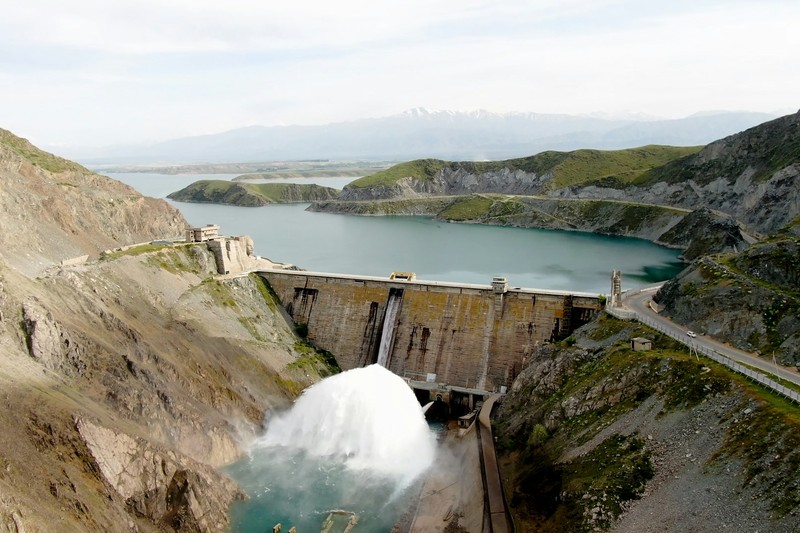
By 4:30 a.m. on Thursday, the water in Wahiawa Reservoir had risen to within three inches of the evacuation threshold. By 8:30 a.m., Oahu’s Department of Emergency Management issued a five-word warning to 5,500 people living downstream: the dam could fail at any time.
The Wahiawa Dam is a 660-foot earthen structure built in 1906 to irrigate sugar fields on Oahu’s North Shore. It was never engineered for what it faced this week — up to 12 inches of rain overnight on ground already saturated from a kona storm system that dumped more than five feet on parts of Maui the previous week. Water poured over its spillway at 1,500 gallons per second. The dam’s crest sits at 88 feet. A portable AquaDam had been deployed to push effective capacity to roughly 90 feet. That was the margin.
5,500 People, Two Towns, No Exit
Residents of Haleiwa and Waialua, surf towns and farming communities strung along Oahu’s North Shore, were ordered to evacuate before dawn. Roads flooded fast. Kamehameha Highway, the main artery linking these communities to the rest of the island, was impassable in stretches. Farrington Highway closed in both directions.
“There’s no exit possibility for a lot of folks right now,” state Representative Amy Perruso told Honolulu Civil Beat.
The National Guard, Honolulu Fire Department and ocean safety lifeguards launched search-and-rescue operations by helicopter, high-clearance vehicle and Jet Ski. Seventy-two children and adults were airlifted from a youth retreat camp cut off by floodwaters. At Waialua High School, an initial shelter of 186 people and 45 dogs was later bused to higher ground at Wahiawa District Park.
Honolulu Mayor Rick Blangiardi described the damage as “catastrophic.” Dozens — possibly hundreds — of homes sustained damage, according to the mayor’s afternoon briefing. At least one home in Mokuleia was washed away entirely. No deaths or injuries had been reported as of Thursday evening, though Governor Josh Green called it “a very touch-and-go day.”
A Dam Dole Knew Was Dangerous
The dam has failed before. It collapsed in 1921 and was rebuilt. A 1978 U.S. Army Corps of Engineers report noted that the structure — like many plantation-era dams in Hawaii — was designed on “precedence and experience” rather than modern engineering standards. The same report flagged the spillway as undersized.
Dole Food Company, which inherited the dam through its acquisition of the Waialua sugar operations, has owned it ever since. The state has sent Dole four deficiency notices since 2009 and fined the company for failing to address safety shortfalls. A 2020 inspection rated the dam’s condition as “poor.” Federal assessments designated it as having “high hazard potential,” estimating that a failure could endanger more than 2,500 people.
Dole’s general manager Dan Nellis acknowledged the company had made only “minor tweaks” over the decades. The company has cited limited resources in the pineapple business. Yet Dole plc reported net income of $155 million in 2023 — its highest since going public — and paid $92.4 million in shareholder dividends over the following years, according to Honolulu Civil Beat.
During Thursday’s emergency, Dole maintained the dam was “stable and structurally sound” with “no signs of damage.” State officials were less reassuring. “It’s not a matter of ‘if’ something happens. It’s a matter of ‘when’,” state engineer Carty Chang warned in 2023. “We have a very precarious situation.”
An Acquisition That Hasn’t Closed
The Hawaii Legislature approved state acquisition of the dam in 2023, allocating $26 million for the purchase and spillway repairs. Dole had offered to donate the structure in exchange for the state assuming repair costs. But as of this week, the transfer remains incomplete. The estimated price tag for the full system and safety upgrades has since ballooned past $50 million, and the acquisition deadline is not until June 2026.
Meanwhile, in April 2024 the state land board voted to remove enforcement penalties against Dole, effectively absolving the company of major safety improvements while the transfer was pending.
The dam held on Thursday. By Friday afternoon, reservoir levels were falling. But Oahu remains under a flood watch through the weekend, with meteorologists predicting further pulses of rain. The spillway that could not handle a probable maximum precipitation event in 2024 has not been upgraded since.
Hawaii is not alone in this bind. Across the United States, the average dam is 62 years old, according to the American Society of Civil Engineers. Wahiawa is nearly twice that. The pattern is familiar — aging infrastructure, deferred maintenance, ownership that treats public safety as someone else’s line item — until the water rises and the margin shrinks to three inches.
Sources
- Over 5,500 told to evacuate flooding in Hawaii as officials warn that dam could fail — NPR
- ‘Catastrophic’ North Shore Flooding Prompts Evacuation, Alerts — Honolulu Civil Beat
- ‘We’re Screwed’: Dole Did Little To Fix Dangerous Wahiawā Dam — Honolulu Civil Beat
- Thousands ordered to evacuate as Oahu floods put dam at imminent risk of failure — NBC News
- ‘Imminent risk’ of Wahiawa Dam failure triggers evacuation order — Hawaii News Now